I rode from Boorowa to Cowra on Saturday and checked into the Imperial Hotel. Preparations were being made for a ‘big party’ later in the night. Well that party did go off. The best part for me (a non-guest) was the selection of music: Deep Purple, the Stones, Led Zeppelin, Cold Chisel etc. There was one song that was played at least seven times: the Choir Boys’ Run To Paradise. A great song and their only real hit.
An interesting experience staying in the hotel was that it closed on Sundays. In Cowra ‘closed’ means ‘closed’. In the morning and for the rest of the day and night, there was no one in the place except me. I had the key to place and that was that.
I decided to spend the day taking in the sights of Cowra. Essentially there are two: the WWII POW Camp and the Japanese Gardens.
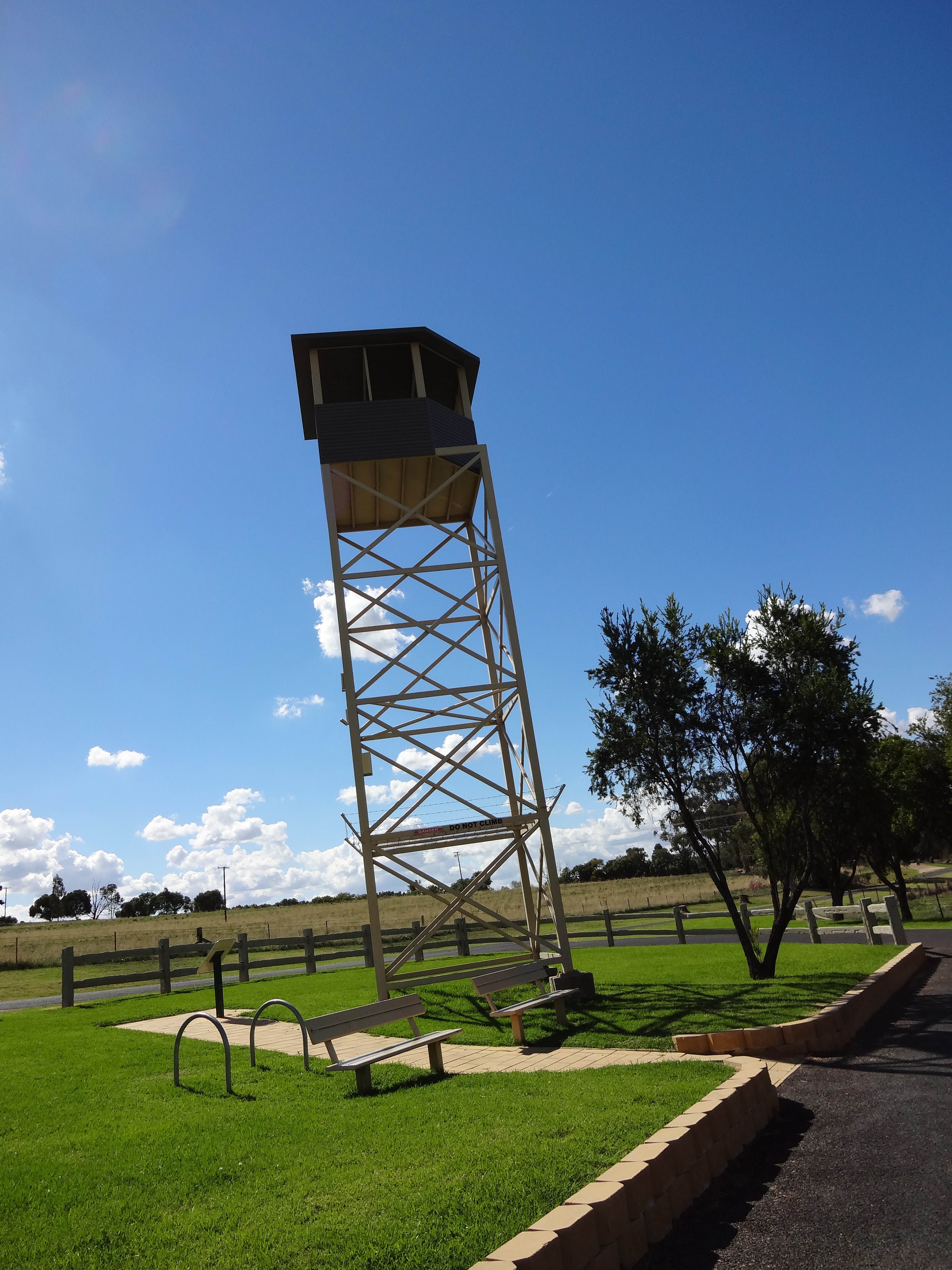
Cowra is famous for being the place where Japanese Prisoners of War (POWs) staged an escape from camp on the outskirts of the town. The Australian Ware Memorial site provides the following details:
“By August 1944 there were 2,223 Japanese prisoners of war in Australia, including 544 merchant seamen. Of these 1,104 were housed in Camp B of No. 12 Prisoner of War Compound near Cowra, in the central west of New South Wales. They were guarded by the 22nd Garrison Battalion.
On Friday 4 August, in response to information that the Japanese were discussing a mass outbreak, notice was given that all Japanese prisoners below the rank of Lance Corporal would be transferred to the Hay Prisoner of War Camp. About 2 am on Saturday 5 August 1944 a prisoner ran shouting to the camp gates. Soon afterwards an unauthorised bugle was heard and prisoners, armed with knives and improvised clubs, rushed from their huts and began breaking through the wire fences. Sentries opened fire but several hundred prisoners escaped into open country, while others who remained set fire to the camp buildings.
On the night of the breakout three Australian soldiers were killed and another three were wounded. Privates B.G. Hardy and R. Jones, who were overwhelmed while manning a machine gun post, were posthumously awarded the George Cross. In the following nine days 334 prisoners were retaken. In all, 234 Japanese were killed and 108 wounded”.
At the Cowra Visitors Centre there is a display with a quiet clever hologram. The hologram is a girl talking about the break out and her boyfriend who was captured by the Japanese in Singapore.
There are several sections to the presentation. In the final section she talks about her boyfriend being beaten and starved by the Japanese on the Thai -Burma Railway – the Death Railway. Over 16,000 British, Australian, and other allied soldiers were killed on the railway. This represented over 30% of all prisoners.
My father, a British Soldier, was on the railway and was later sent to Japan. He experienced more hardship than most that survived.
The Cowra Visitor Centres’ display also highlighted that fact that the Japanese, along with Italian and other prisoners in the camp, were all well treated.
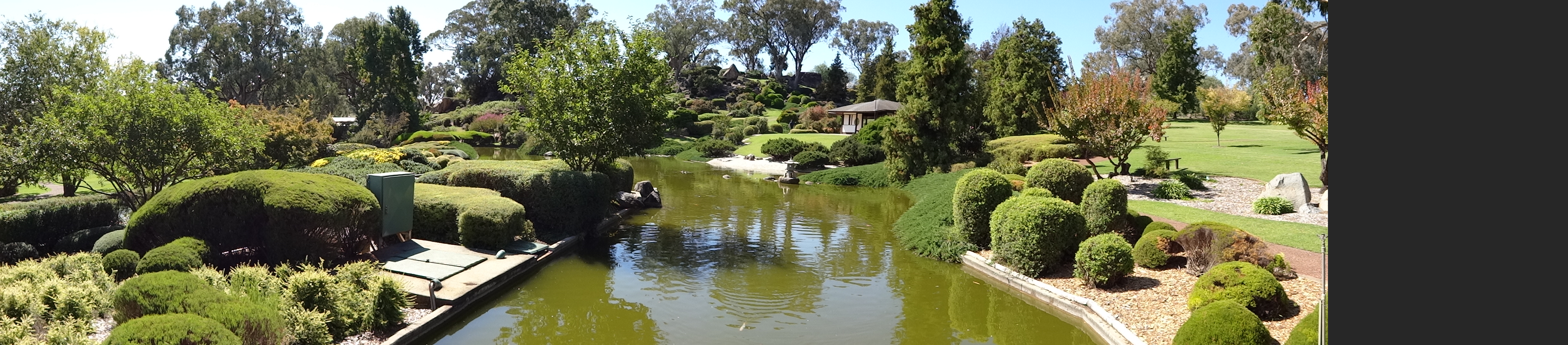
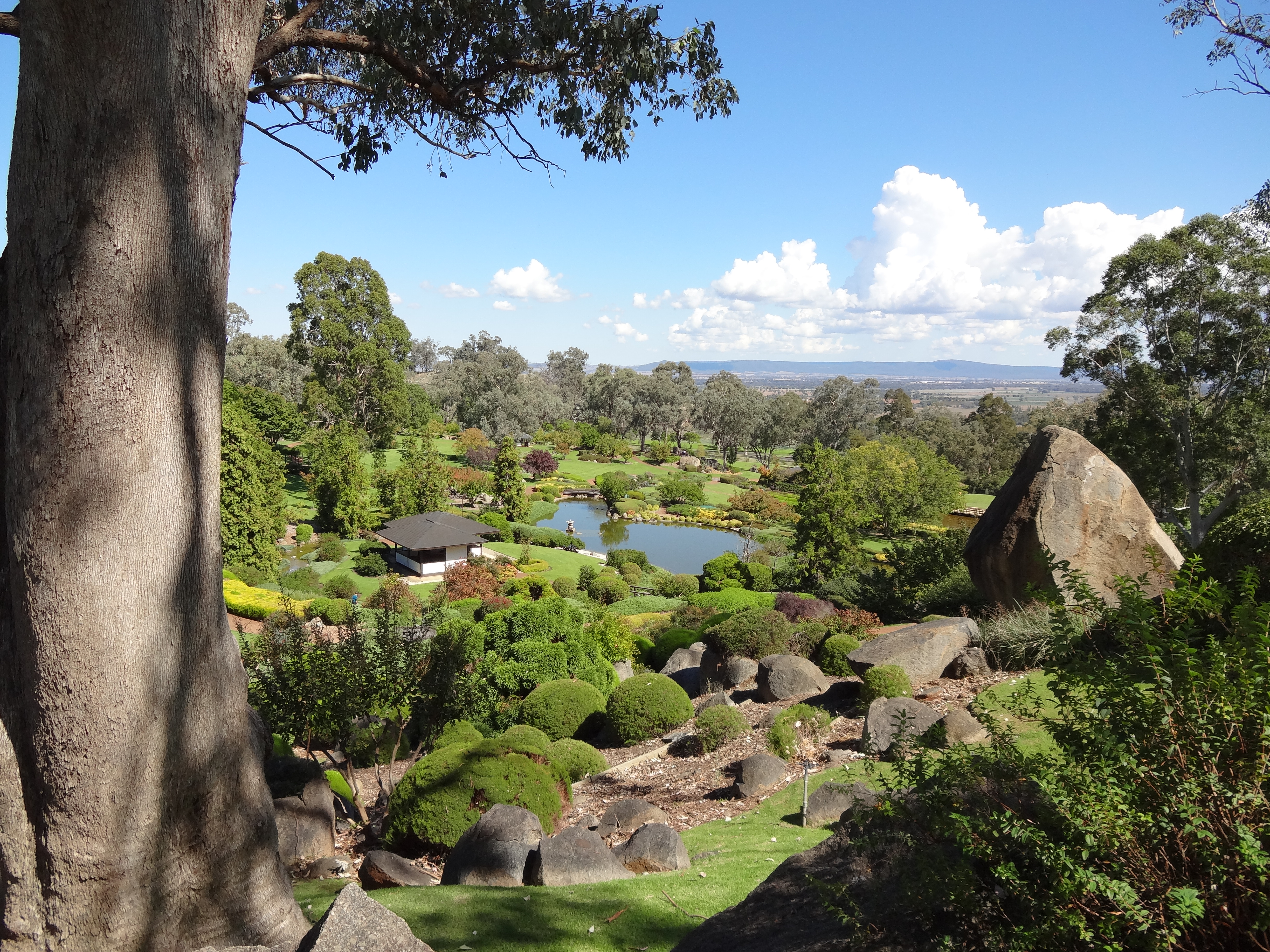
The Japanese Gardens is beautiful and tranquil place.
 billrider2013