Knysna, Plettenburg Bay and Jeffrey’s Bay

Knysna

Wilderness was good, however it was time to move on.

The thing about the Baz Bus is that while it has lots of advantages, it is restricted in there is only one bus heading in each direct along the Garden Route.  This means that it you can almost most spent a day travelling a very short distance.

Knysna  

My next stop was Knysna which is not far from Wilderness. I was difficult to get accommodation due to the Easter weekend and the school holidays. I got a place at the Knysna  Backpackers, but to move to another place after one night and them back down the coast to Myloi Beach on the third night.

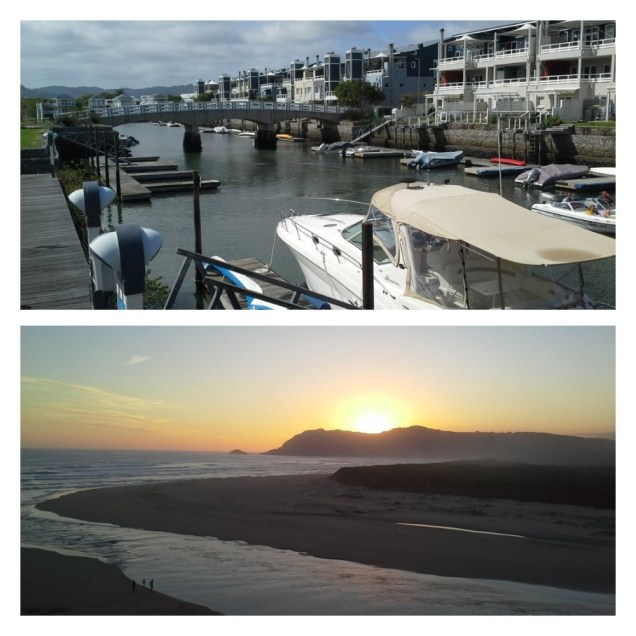
Knysna located on very large lagoon.  It is a big tourist and fishing town.  There is an island very near to the CBD.  A ‘gated residential’ development has been built on the island.  It is very new. Walking around, it would appear that there are still a lot of the places yet to be sold.

I had a meal in restaurant on the island on my first night.  The place was full of older people with what appeared to be two other generations of their families. I suspect that a lot of wealthy South Africans have decided to retire in the town.  The ‘three generations’ thing were their children and grandchildren paying a visit on the holidays.

Myloi Beach

I actually had to back track to get to Myloi Beach which is part of Sedgefield.  I had booked a shuttle through the hostel.  When it arrived, I was greeted by the late middle aged driver and woman who was feeding a baby.

As we headed off, the bloke explained that the woman was his wife and the baby was his granddaughter.  They were looking after the baby because its mother, his daughter was at work.  He told me that he and the family had moved from the Orange Free State to the Western Cape, because “it was the only providence that was not going to the dogs”.  I asked him what he did in the Orange Free State.  He told me that he that he and his wife “ran a Funeral Business”.    They had decided to settle in Sedgefield and as a retire job, run mini-bus shuttle/taxis service.

I asked him if he expected Uber to start in the area.  He said he hoped not as that would mean “more blacks driving taxis”.

I turned the conversation to rugby.

Sedgefield is very small.  There are a lot of very large holiday houses.  The people in the hostel told me that some of the houses “are hardly ever used by their owners”.

Plettenburg Bay

My next stop was Plettenburg Bay.  This is another tourist place, but with other industries and a sizable black community living in ‘townships’ out of the main town. Again the issue of safety at night arose.

It was recommended by the staff in the hostel that “you don’t walk around the streets after twilight”.

On the first night met an English woman who worked for the British Olympic Canoeing Association. Without being rude, it was obvious that her role was administration, not a sport related role.  It was interesting to talk to her for about an hour.  After that, the ‘gin and tonic’ had taken its toll.

I spent a couple of days in Plettenburg Bay, mainly walking on beach, with an occasional dip.  The water was ‘cool’ to say the least.

Jeffrey’s Bay

It was quite late when I finally got to Jeffrey’s Bay.  This is a well-known surfing spot.  I had heard that the Island Vibe Hostel was a ‘party place’ and decided to book a private room away from the main part of place.

There were lots of young Europeans and Brits in the hostel to learn how to surf.  I chatted to a couple Australian blokes who were earning their keep by being surfing instructors. They told me that they were having a “seriously good time”. Looking at some their female students, I could see why.

The beaches in Jeffrey’s Bay are really good.

I found a really good restaurant near to the main beach called Kitchen Windows.   It didn’t seem to have any competition.

Next stop was to be another big city – Port Elizabeth.

Flick Link

https://www.flickr.com/gp/twwilko_photos/j4zrdp
 

Wilderness

DSC05592

I left Hermanus about mid-morning. A local taxis took me to the Baz Bus pick up point about 40 minutes out of town.

The driver was an interesting bloke.  He told me that he was from Zimbabwe and had living in South Africa for five years.  He had left Zimbabwe because “the economy was so bad”.  He had worked at a number of jobs before getting the job as taxis driver.  His wife worked in a restaurant in Hermanus.  His two children were at school. He said that it was “easy to get a job because the South Africans did not want to work”.  He said that he hoped to go back to Zimbabwe at some time, but he “will wait and see what happenes when Mugabe dies”.

Travelling through Moules Bay

The Baz bus was almost full.  We passed through Moules Bay.  It is another place where you can do the Great White Shark dives.  However, I had been told that it not a very nice place to stay.  That advice seemed right.

The countryside before and after Moules Bay reminded me of much of western NSW.  There are a lot of eucalyptus trees and wide open paddocks.

Stop in George

We stopped in another large industrial own called George for a late lunch. There was wasn’t much on offer except for McDonalds and some very ordinary cafes.

In Wilderness

It was mid-afternoon when we arrived in Wilderness.  I had decided to stay in hostel that is inland from the own on the advice of the staff at the Hermanus Backpackers.

It was an interesting place with a mixture of accommodation options, including camping sites, dormitories in an old house and some small cottages.

The owner was a bit of a character.  He was very vague and a bit ‘alterative’. The place was largely staffed by backpackers who worked there for no money – they  got free accommodation, food and drink at the bar.

I later found that there were a couple of staff at least working in the bar that seemed to be drinking more than they were serving.  The place ran on cash.  I am not sure if the owner saw all of the cash.  In fact, I am sure he didn’t.

Discussion with Israeli and German Girls

When I checked in,  I was  told that I could book and evening meal.  I took up the offer.  The meal was due to begin at 7.00 p.m. The owner was in charge of the cooking.  We sat down to eat at 8.30 p.m.  The fare was barbequed meats and lots of it. Lots of wine and beers was drunk before, during and after the meal.

At the end of the meal, I got into a conversation with a young Israelis girl and an older German girl who was in her final year of studying medicine.  The Israelis was  incredibly intense.  She seemed to constantly want bring the conversation back to ‘terrorism’ and how “dangerous the world was”.

I later spoke to the German girl about the experience. She said that the Israeli girl “need to take a happy pill”.

Getting Advice about a Park

Over breakfast in the morning, I got into a conversation with an English woman from Brighton who was close to my vintage. She told me that she had rented out her house and “was on an adventure”.  She had been volunteering at animal parks in South Africa.  She organised it all from the UK over the internet.  The arrangement is that you work in the parks in exchange for “free accommodation and in some case free food; however, that was not always the case”.

She said that the best place she had worked was the Addo Elephant Park near Port Elisabeth.  I was glad to hear this as this was a place that I had planned to visit.

Kayaking

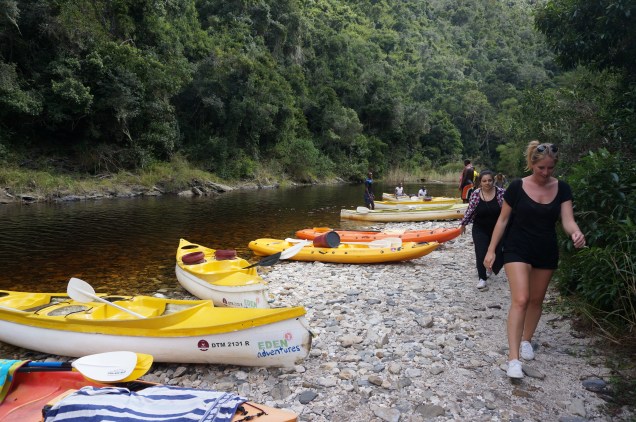
The hostel has kayaks for hire.  The main trip to take in the kayak is up the  nearby river to a waterfall.  The woman from Brighton said she was doing the trip that day. I decide to do it as well.

As it turned out there were about 20 people doing the trip.  The Brighton women said she wanted to “have her own kayak”.  The kayaks were stored in the grounds of the hostel and were carried to river by trailer which carried 6 kayaks at a time.

I was in the last group to be taken to the river.  The women from Brighton was in the first group.

I also ended up in my own kayak.  There were 3 other kayaks each with 2 in them in my group.

We headed off up the river with a strong tail wind.  There were a number of large houses on the river.  They seemed to be holiday houses.  We also passed an ‘Adventure Camp’ that also had a lot of kayaks and canoes on the lawns by the river.

Before we had headed off the hostel member who took to the river said that “if we were tired coming back, we could leave to the river at the Adventure Camp and walk a back to hostel”.

We had been told that it would take about an hour to an hour and half to the point where we would “beach the kayaks and walk to the waterfall”.

The river passed at large camping ground and there were a lot of people heading in both directions in canoes and kayaks.

After a while the we were in large gorge and the tail wind dropped.  I asked a some passing canoeists “how much further is was to the waterfall’?  They said it was “about 30 minutes and then you have a long walk”.

We finally made it to the beach were you leave the kayaks and start the walk.  As it turned out the walk is about 2 kilometres along a well-made a track and boardwalks.  There were a lot of people at the ‘waterfall’ including the woman from Brighton who was sunning herself.  She asked me “what had taken me so long”. I asked her why she had “preferred to be by herself in the kayak”.   She said that she was a competitive rower and paddler and didn’t like being the same boat as people who didn’t know what they were doing”.

The waterfall was a bit of a disappointment.  This part of South Africa is experiencing a serve drought and the water level of this river is very low.

Not able to make it back

I decided to head back to the river and left the Brighton woman sunning herself.

Back on the river, it took about 30 minutes to get to point where you leave the gorge.  I was travelling with some other kayakers from the hostel – they were all ‘two to a kayak’. As we left the gorge we were hit by the wind.  It had certainly increased significantly since the trip up the river.

I found it really difficult going.  With no one in the front of the kayak it was difficult to keep it going in the right direction.  As I struggled along, I heard a voice saying “do you want a tow”.  It was the woman from Brighton.  She passed me with relative ease.

I battled on passed the camping ground.  Albeit, she passed me easily, I could see the woman from Brighton ahead in the distance.

The river made a number of turns.  It was possible to avoid the worst of the wind by staying close to the one bank.

As I approach the Adventure Camp the wind become incredible strong.  People that were obvious from the camp were struggling to get their canoes cross the river. I noticed a number of the kayaks that belonged to the hostel were on the lawn in front of the Adventure Camp buildings. Tried as a might I could not make headway into the wind.  I gave up and beached the kayak and dragged it up onto the lawn.

There were two couples on the lawn with the hostel’s kayaks.  I asked if they were going to try to go on.  They said “no way”.  I asked them if they knew how far it was to the hostel.  They said that they had asked and “it was just next door”.

Anyway we put the kayaks together with two others that were clearly from the hostel and headed down the driveway.

As it turned out, we had been driven quite a long way down the river from the hostel to point where we had entered the water. The advice that the hostel was “just next door was right”.  Back at the hostel I found the woman from Brighton in the reception.  She said “how did you get hear so quickly”.  I told her that I couldn’t get around the bend near the Adventure Camp due to the wind and had left the kayak there”.  She said “so did I”.  That made me feel better.

Nasty Neighbours

Over a beer with hostel owner, in the evening, we were told of his ‘prickly’ relationship with the operators of the Adventure Camp.  They saw him as competition and had tried to stop him hiring kayaks to his guests.  They had also tried to stop quests beaching on “their part of the river bank”.   That was why we were taken to a “public piece of land to enter the river”.  Unfortunately, it is often the case that “afternoon sea breeze makes it difficult to get back to the starting point”.  He often has to collect his kayaks from the Adventure Camp”.

Great Lunch

I had a quiet time the next day, including a leisurely walk into the village of Wilderness and am excellent lunch.

Flickr Link

https://flic.kr/s/aHskxBmhSp


Hermanus and the Shark ‘Dive’

Hermanus

It is only a short distance from Stellenbosch to Hermanus, however it took most of the day to travel there.  First was the shuttle to the Baz Bus stop, then there was the short ride on the bus and then another shuttle (by taxi) to Hermanus.

Hostel

The Hermanus Backpackers turned out to be a good place.  The manager told me that he his wife had owned the place for seventeen years.  It showed, they know what they are going.

The hostel has a resident Staffordshire Terrier called Jock.  He is real character and checks out all the guests.  They also have two cats.  One is huge.  Check out the Flickr link.  The owner told me that they had asked that vet why it was so fat.  The vet told them with a laugh that “it certainly wasn’t from the food it got from hunting”.   Its size is a mystery.

Old People

Hermanus is a holiday and retirement town.  Its peak season is in December and January, when people come from all over the RSA to stay.

I had, of course, missed that peak season.  This has left the retirees.  I felt really young in the town.

Despite the fact that there were not mainly tourists around, all the restaurants appeared to be open.  I had some really good meals.

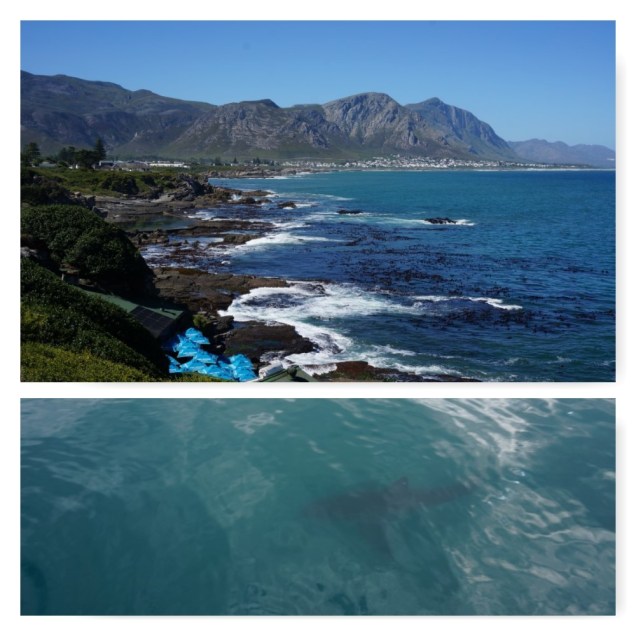
On the afternoon of the first day, I went for a walk along the path that runs about 9 kilometres along the coast.  The coast line is very spectacular,

German girls attacked

There was a bit of drama in the evening.  Three German girls were attacked by two blokes near the hostel.  They were roughed up a bit and their bags were taken.  The police were called.  They said that they suspected the attackers were from Cape Town.

The girls took the police to the scene of the attack.  The police found the girls’ bags.  The only thing that had been taken was cash.  Their passports and credit cards were still in the bags.  It will be interesting to see what happens to the incidence of this type of robbery when we finally move to cashless economy.

I had booked a shark dive for the next day.  Unfortunately, it was cancelled because of the forecast sea conditions.  I decided to book a ‘fat tyre’ bike ride.

In the morning I found out that the bike ride was also cancelled because of the high winds.

I took the opportunity to catch up on some reading, including Niki Savva’s book on the downfall of Tony Abbott. It is well worth a read.

Finally Get to Dive

In the evening I was told that the shark dive would be on the next day. It was to be an early start and I was to be ready by 7.00 a.m. There was one other person from the hostel going on the dive.

I duly got early and waited in the reception area for the dive bus to arrive. The other person turned out to be a Canadian girl who was studying at the University of Cape Town for a semester.  We  got to chat for a long time as the bus not arrive until after 8 a.m. The Canadian girls was not surprised at all.  She was very down on South Africa, based on her experience at the university. It “was so disorganised and was a waste of time”.  She had decided that it wasn’t worth finishing her semester and decided to travel instead.

As it turned out, the bus had come from Cape Town and it had been held up in the morning traffic.  This was not the fault of the driver/guide.

We drove from Hermaus to Gansbaai   where the Great White Shark dive boats are based. While we were having breakfast, the guide gave up a briefing on what to expect.

He told us that the water would be very cold, only 9 degrees centigrade.  That is very cold.  He also said that we will be standing in a wire cage that will be slung over the side of the boat. There will be five people in that cage at any one time. The sharks will be attracted to the boat with a mixture of blood and pieces of fish.  If a shark arrives, one of the crew will throw a tuna head in the water.  The idea of this is to give the shark sometime to aim at.  The plan is to attract the shark close to the cage.  He said that the shark thinks that the cage is solid piece of steel and will not deliberately crash into it.  It can, however, miss judge its lunge at the tuna head and may bump into the cage.

It was finally time to go into the boat.

It took about 30 minutes to get to the spot where we were to ‘dive’.  There were four other boats is the area and it took another 20 or so minutes before the guide decided that he had found a suitable spot.  The anchor was dropped and one of the crew immediately started to spread the blood and fish bits into the water.

The people that were going to do the dive were handed wet suits.  They were really thick and tricky to put on.

Within 5 minutes a shark arrived. The cage was dropped into the water.  The first people to get their wet suits on were told to jump into the water.  They all screamed as a result of the cold.

The shark did its things, following the tuna head up to the cage.

After about 10 minutes, the guide told the people in the cage to get out.

It was my turn to get in to the cage.  The initial shock of the cold water was exactly that – it was a shock.  It took at least two minutes before the wet suit did what it supposed to do and  you start to warm up.

Because you are wearing a wet suit without a diving weight, you are very buoyant.  The idea is to hold on the bar inside the cage and push yourself down.  Even though the shark is moving slowly it is only in front of the cage for 5 or seconds.  The crew man who is throwing the tuna head calls  ‘down, down’, when the shark is approaching.

There was quite a wait before the crew man called  ‘down, down’, after I got into the cage.  We were to later learn that the shark that I got to see from the cage was different to the first one.

Reasonable GoPro Shots

I had my GoPro video camera in the cage.  As it turned out I managed to get a couple of reasonable shots of the shark. It actually came closer than the video would suggest. The wide angle setting of the camera’s lense makes it took further away.

The ‘stand and dip’ or dive if you like, was good.  I am glad that I did it.  It is much better than seeing sharks in a tank in an aquarium.

The shark passed about 10 time better we were ordered out and another group of 5 hopped into the cage.

The shark stayed around for them, soon moved away.

Canadian Girl Doesn’t See Much

Another group got into the cage, including the Canadian girl.  They had to wait for ages before another shark to arrive. When it did, it only made two passes.

The group stayed on in the cage for ages before the guide decided that no more sharks were likely to pass and it was time to head back to port. When she got out, the Canadian girl ruefully observed, that, “nothing seemed to be going right” for her in the RSA. “Even the sharks were conspiring against her.

A lot of Vomiting

About five of the passengers had suffered sea sickness as we wallowed about on the anchor.  As we headed back into port the boat was tossed around.  The number people with sea sickness increased.  Those who were ill fought to find a place to heave over the side.

Information about the Sharks

Back in the port, we were given more to eat.  The guide told us some things about the sharks and took questions.

A couple of the things he said were interesting.  Apparently the scientists that are studying the Grea White Sharks ae not sure if their number are increasing or decreasing.  Their guess is that they are no increasing and the is of concern that when they are caught by accident, e.g. tangled in nets, the size of the sharks is getting smaller and smaller.

He also said that it is close to 100% certain that any attacks on humans are accidental.  When a shark does bite a human it certainly does want to eat them.  Their favourite food is smaller sharks, e.g. young Great Whites or smaller species like Bull or Reef sharks.  They will only eat small seals and fully gown seals will probably injure them.

Flickr Link

https://flic.kr/s/aHskwZtuNw

Stellenbosch

DSC05568

I ended up staying Cape Town for all most two weeks.  That probably tells you something about my opinion about the place.  It is really good.

It was time to move on and I activated my Baz Bus – ‘hop on off’ bus ticket that would take me through to Durban. My first stop was Stellenbosch which is a university town only 120 klms or so from Cape Town.

The Baz Bus is service that is designed for backpackers.  The advantage of the service is that it takes you from door to door i.e. from hostel to hostel.  The disadvantage is that this involves a lots of individual pick-ups and drop offs – particularly in the big towns and cities.

It took us ages to leave Cape Town.  The traffic is a really issue at the best of times.  It was a real pain when it seemed that the twenty or so of the passengers were to be staying in and fifteen different hostels.

Into Stellenbosch

The Baz Bus stopped at a service station off the main highway.  There we were met by another shuttle bus that took me and two Australian girls into Stellenbosch. The hostel that I had booked into was near to the university campus.  It was simple but clean.

Walk around the town

I decided to have a slow day, checking out the town by foot.

Stellenbosch is a very pleasant place.  The university dominates the town.  There are London plain trees lining the streets.  It is clearly very prosperous.  There are a couple of streets, in particular that have lots of trendy cafes and restaurants.

I returned to the hostel and booked a wine tour for the next day.

When I told the staff that was heading into town for some dinner, they told me that I should take a taxi from the down town area to back to the hostel.  I thought that was a bit odd as I had felt very safe walking around during the day.  Unfortunately, this is the way it is in the RSA.  You have to be careful at night.

Smoking in a Pub

I dropped into a pub for a beer before having some dinner.  I was struck by the number of people that were smoking.  I had encountered smoking in pubs in Cape Town.  However virtually everyone seemed to be smoking in this place.  It seemed so 1970’s and so 3rd world.

After dinner, I took an Uber taxi back to the hostel. It cost AUD 2.25.  The driver seemed to be pleased with the fare.

Wine Tour

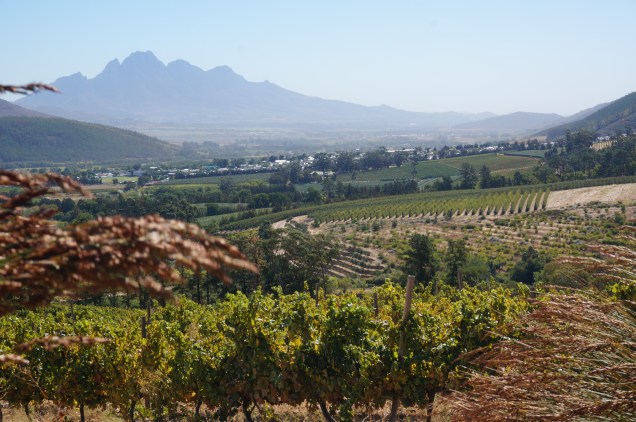
The next day I went of the wine tour.  The South Africans call wineries, ‘wine farms’.  I suppose that we have ‘wheat farms’, but it does seem a bit odd to call them ‘wine farms’.

The other people on the tour were two couples from Holland. They were very reserved to begin with.  This slowly changed as the day progressed.

In all we went to six farms.  They were all small family owned businesses.  This is good to see.  A couple had very impressive gardens and old buildings. The wines all seemed to be good to my taste and are really inexpensive.

Demonstration

I spent another day in Stellenbosch.  As I walked through the university area, I came across a demonstration.  They were Black students demonstrating about fees, lack of affordable accommodation and the use of Afrikaans in the university.  This is big issue in the RSA.

Flickr Link

https://flic.kr/s/aHskwgQ7J1

Link to the BBC on the Demonstrations

http://www.bbc.co.uk/news/business-35883919


Cape Town – other

Cape Town

I have posted three other pieces about my time in Cape Town. This one fills in the gaps.

Flight from Singapore

I flew from Singapore on Qatar Air. They along with Emirates are the ‘go to’ airline for the cheapskate traveller heading east from SE Asia.

My neighbours on the flight to Doha were a middle aged couple for from Kent.  He was in the trucking business and they had just been on a cruise that took them from “Singapore and back to Singapore”.  They “got off in Penang, but didn’t get off in Thailand”.

I asked them what they thought what would happen in the ‘Brexit referendum’.  He told me that England was “going to the dogs because of the all the migrants”.  I said that it was a “big issue in Australia”.   He told me that he “heard about Tony Abbott”.  I said “he was an immigrant having been born in England”.  I also noted that Rupert Murdoch was a “serial migrant, having migrated to the UK and then to the USA”.

Curiously the bloke decided that the film was more interesting than talking to me.

Keeping on Walking

I bought a FitBit in Brisbane at the beginning of January.  It has made me aware of moving and not moving.  It is sometimes difficult to walk the recommended 10K steps per day.  During the layover in Doha, I walked around as much as possible.

BIG Hostel

I had made a reservation with the BIG Hostel in Green Point.  It was very highly rated on the booking site I use.

The staff at the hostel recommended a ‘backpacker’ shuttle service from the airport into the city.  There was a bit of a mix up finding other people that had booked the service.  Being a bit delayed is not an issue for a retiree.  The Rand 200 fare was very reasonable.

The hostel turned out to be really good.  It was in two houses that had been converted into a hostel with a mixture of dormitory and private rooms.  The staff were very helpful.

Green Point is one of the better suburbs in Cape Town.  It is where the World Cup soccer stadium was built and is only a couple of kilometres from the Waterfront area.

Notwithstanding that Green Point is a good area, the staff advised that it is not safe to walk around the streets after 8 p.m. at night.  This probably being a bit risk adverse, but it is an indication of what it is like in Cape Town.

All the houses in the area have security fences and alarm systems.  Many of the fences have razor wire.  Over the days that I was there, I noticed that it was usual to find broken glass in the street in the mornings.  This was caused by cars being broken into.

Restaurants and Craft beer

The hostel was less than 800 metres from ‘Main Road’ that leads from the CBD along the coast to the beach side suburbs to the east.

There are a lot of restaurants and some bars of the road.  There was one bar that served some really good craft beer.  It is disappointing that it is not recommended to walk the short distance from this area to the hostel after dark.

Walking to Waterfront

Notwithstanding the security issues after dark, it is safe to walk around this part of Cape Town during the day.  This seems to be true for all people including single women and older people.

I often walked from the hostel to the Waterfront area.  It is a really great area, will lots of restaurants, bars, cafes and shops.

On my second day, I had lunch at a great fish restaurant in the Waterfront.  I got a Messenger call from an old school mate who had recently travelled from Nairobi to Cape Town.  It was great to chat with him.  The internet connect was very good and the restaurant was quiet.  As it turned out, that was one of the few times where I had good internet and the place was quiet.

It would appear that good internet speeds are rare in South Africa.  Where the speeds are good, e.g. in an up market restaurant, the place is often noisy.  This has made Skype and Messenger calls problematic.

Comedy Club

My mate suggested that I check out the Comedy Club for “good beer, good food and a laugh”.  It was good tip.  I had a great night.  There were four acts and a very amusing Afrikaans compere.

Rugby at Newlands

On the first Saturday, that I was in town, I went to see the Stormers play the Bulls at Newlands.  The game was ‘sold out’, but I managed to buy a ticket at half time.

It is a good stadium to watch rugby.  The stands are very steep and you are close to the action.  There was a good mix of people in the crowd. I was under the impression that rugby was still the preserve of the whites.  It was encouraging to see lots of other faces in the crowd. There are also a lot on non-white players, however this seems to be to taking time to find its way into the national team.

It was strongly recommended by the staff at the hostel that I take a taxi to and from the ground.  There is a train, but this is “not for people like you”.

Long Walks

When I was in Cape Town I took and number of long walks along the coast to the east.  This took me to Camps Bay and other up market suburbs.   The people living there live very well.  I noticed that a lot of the houses and apartments being advertised in the real estate windows featured ‘staff quarters’.  That says a lot.

I was amazed by the number of really up market cars in Cape Town.  These included Bentleys, Maseratis as well as the usual Mercedes and Range Rovers.

I took the occasion Citi Bus.  I was typically the only white adult on the bus.  There the occasional white school children, but most the passengers were non-white.

Flick Link

https://www.flickr.com/gp/twwilko_photos/N1Yam4


Climbing Table Mountain

DSC05547

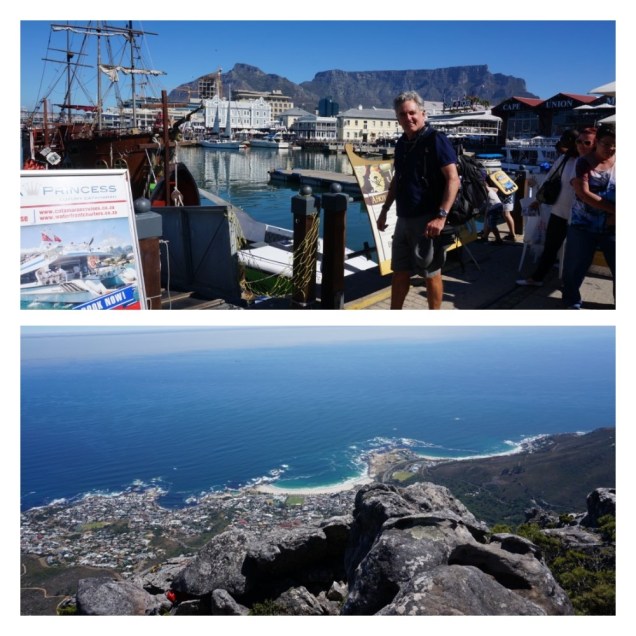
I went to the top of Table Mountain on my second day in Cape Town.

That time I took the cable car.  It was a great day with clear blues sky and no wind.  The cable car itself is interesting in itself.  As it moves it rotates 360 degrees.  This enables everyone to have an equal opportunity to enjoy the views.

The top of the mountain is, as you would expect, very flat.  It is also quite wide, at least 500 metres across.  I spent about 2 hours walking around checking out the various viewing points.  It is a very spectacular place.

German girls wanted to walk to the Top

My plan was always to walk to the top of the mountain.  There were a few days when the top was covered in cloud and/or, it was too windy for the cable car to operate.  The non-operation of the cable is an issue in that, although I was confident of being able to climb up the mountain, I was certainly not confidential that my old knees would be able to cope with the walk down.

The staff at the hostel always wanted to know what people were doing.  Part of that was to put groups of people together.  It most cases this was for safety reasons.

When I told me that I was planning to walk up the mountain, they told me that there were three German girls that were also planning to climb the mountain on that day. We formed a group.

One of the girls had been using Uber.  She ordered a car and we headed off to foot of the mountain.  The 20-minute drive ended up costing up 80 Rand (less than AUD 8) – amazingly good value.

The Walk

The first part of the climb was a two kilometre walk from the bottom cable car station along a road to the start of the walking track.  As we walked I found out a bit about the German girls.  Two were friends from Hamburg.  One wasn’t feeling too good as a result of a heavy cold.  The other, older girl, was from Munich and told us the she was an experienced ‘trekker’.

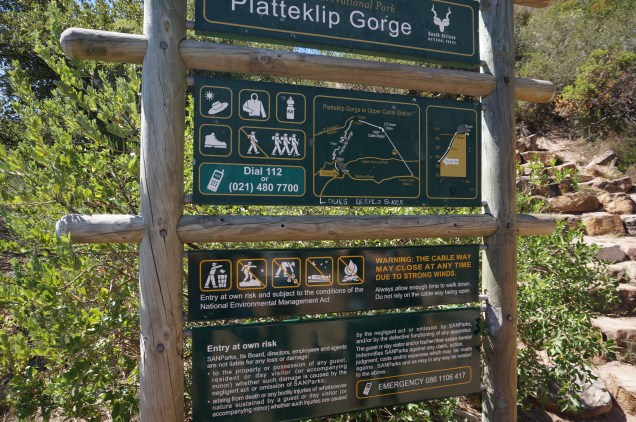
A sign marks that start the walking track to the top via Plattwklip Gorge.  The sign advised that it took one hour to get to the gorge and another hour to get to the summit.

We hadn’t gone far when it became obvious that the two younger girls were struggling.  In particular, the girl who wasn’t feeling too good, was finding it really tough.  There was a lot of chatting in German.  The older girl told me that she had advised the others “simply take their time and walk at their own pace and that we would meet them at the top”.

As we headed off, it was clear that the older girl was really “an experienced trekker”.  Actually she could have given a mountain goat a run for its money.  I really struggled to keep up and decide to go at my own pace.

There were a lot of people on the track.  It was notable that even after over thirty minutes, no one was heading down – everyone was heading up.  Spurred long by the “experienced trekker”, I was overtaking other walkers and didn’t look like being overtaken by anyone else.

As it turned out, I was never more than 20 metres or so behind my pace maker.  At various points she stopped to wait for me.  At one point she stopped to chat with an English couple who were resting a shady spot.  This was a good idea, given the strong sun.  The couple were hilarious – they were arguing like ‘cat and dog’.  The wife was blaming the husband for “forcing [her] to climb up this impossible track…..he must have known how difficult it was and why didn’t he tell her………”.  He completely ignored her and when he heard that I was Australian he  simply what to ask about my thoughts on rugby and cricket.   This infuriated his wife.  My German companion tried to calm things down by saying she thought that “the track would get easier further along”.

As we left that arguing couple, I asked my companion what made her think that the “track would get easier”.  She told that it would probably get “more difficult”.  I did say anymore.

Finally at the Top

After two hours we were finally at the top.  I was wearing my FitBit.  I noted that it calculated that I had walked up 240 storeys.  I assumed that was about right, however it seemed lot more than that to me.

We wandered around the top of the mountain for a while.  At one of the viewing points, we came across for English girls who were doing handstands.  They asked us to photograph them.  They were ‘cards’.  They were travelling together and had decided to be photographed doing handstands at the all the ‘tourist spots’.

The German girl was keen to wait to make sure her countrywomen made it to the top safely.  We stopped off in the summit café for a beer. A couple of South Africa ‘lads’ joined us.  They didn’t pick our table because they saw me.  A rather interesting conversation ensued.  They were intrigued why we had walked up the mountain together.

Other Girls Make it

After about 30 minutes later my companion received an SMS.  The other German girls had made it to the top and were at the cable car station.  Slow and steady does work.

We took to cable car to the bottom.

Flickr Link

https://www.flickr.com/gp/twwilko_photos/TTwgB3


Cape of Good Hope

DSC05533
I had decided to travel along the Garden Route to Durban by the Baz Bus. This is a company that specialises in the backpacker market.

When I booked my hop on hop ticket from Cape Town to Durban, I was offered a tour to the Cape of Good Hope. I took up the offer.

The bus picked me up at the hostel at 8.30 a.m. I was introduced to the other passengers. They were the usual eclectic lot – Germans, Dutch, French, Brits and Australians.

More Seals

We headed out of Cape Town along the coast. The first stop was Hout Bay. We were offered a boat trip to see some seals. It may sound that I am blasé about seeing seals. I have seen lots over the past 2 years in Tasmania, California, Chile, the Galapagos Islands, and now here.

Simon’s Town

Next stop was Simon’s Bay which was established by the British as a naval base. It is still a naval base, obviously run by the South Africans. The guide pointed out one of the six South African submarines. There seem to be doing as well as Australia on this front, at least in terms of numbers.

The town is on False Bay. The bay got its name because the sailors looking for Cape Town Harbour, often found themselves in the ‘false’ bay by mistake.
We stopped to see a Penguin colony. Again I like I am over ‘penguined’ at the moment. Having not long been to Phillip Island in Victoria

Funny Stories

We left Simon’s Town for Cape National Park. There was a lot of road works and progress was slow. A number the passengers started to chat about their travels. Two girls from Melbourne were particularly amusing.

They had been on a ‘truck’ trip from Nairobi to Cape Town. They told of some very close encounters with wild animals including a hippopotamus. It “scared the shit out of” them.

They also told a very funny story about sky diving with a Norwegian girl who was also on their truck. They were videoed and photographed on the way down. One girls said that her face was so “contorted in the photo that she could hardly recognise herself”. She also “doubted if her mother would have recognised if it was her”.

However, the “Norwegian looked as though she a just won Miss World and was about to collect her trophy – what bitch – ha ha ha”.

Bike Ride

We arrived in the park and the driver stopped the bus. The bus was towing a trailer with twenty bicycles. All the passengers with the exception of one took the option of a short 10 kilometres or so ride to our next stop for lunch.
It was good to be on a bike again after such a long break.

I had my Garmin, but as often the case when don’t put by glasses on, I managed to turn the timer off rather than on.
I was however, wearing my FitBit. When I synchronised the device in the evening, I was impressed to find that it had worked out that I had been riding a bike for 25 minutes or so.

A Dutchman’s view of Afrikaans

After the ride we stopped for lunch. I was simple – sandwiches and fruit – but very good.
I chatted with a Dutch bloke who had some interesting things to say about the Afrikann South Africans and their language.

He described Afrikaans as being “baby Dutch”. I look this as being the same as ‘pigeon English that is used in Papua New Guinea. I told him that Fire Escape in pigeon is ‘long stair hurry up go outside’. He told me that Afrikaans is similar . He said that Battleship is in Afrikaans is ‘the ship that is not afraid of anything’

I am not sure that google translator knows about that, but it makes a funny story.

Lighthouse

The next stop was lighthouse on Cape Point. Apparently there was a problem with the lighthouse in that because it is located at the top of the cliff, it is often covered in fog. As a result it did do what it was supposed to do, that is be seen by ships. Another lighthouse was built lower down the hill.

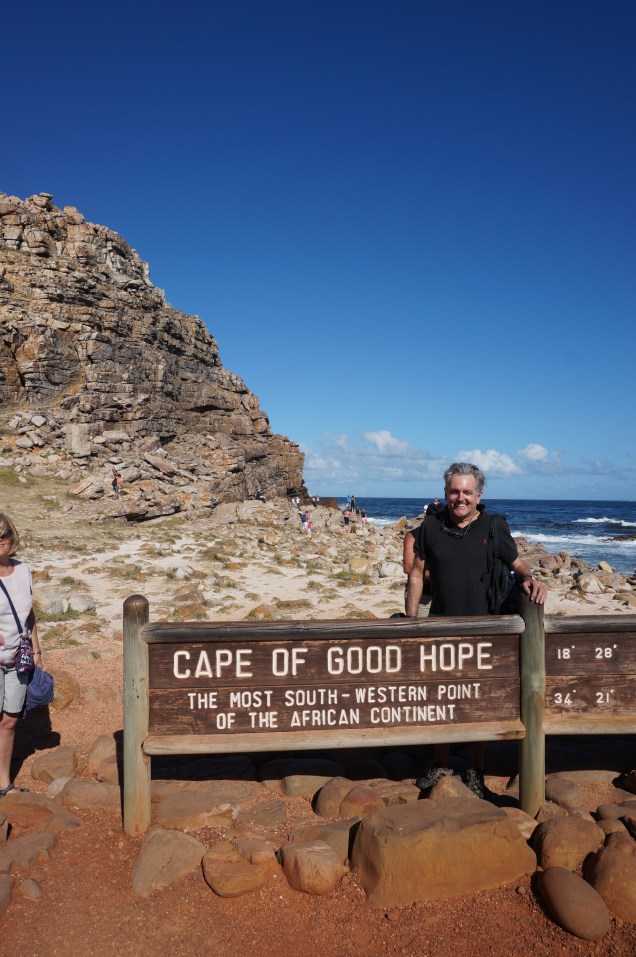
Cape of Good Hope

We piled back onto the bus to be taken down to the Cape of Good Hope.
We all had the obligatory photos take. As usual a bunch of German tourists ignored the queue. They are amazing. I have taken to telling them: “don’t mind us, just think of this line as Poland in 1939, just walk right in and feel at home”. It upsets them and so it should.

Slow Trip Back

I was a slow trip back in the Cape Town peak (two) hour traffic.

Flickr Link
https://flic.kr/s/aHskvERSfA

Black Township

DSC05495

When I am travelling I like to read books about the places that I am visiting. Typically, these are books written by travel writers. These are not travel guides, but are books written by writers about their travels, in the style of Bill Bryson or Paul Theroux.
On this trip I a reading ‘Cape Town to Kruger – Backpacker Adventures in South Africa and Swaziland’ by an Irish bloke called John Dwyer.

One of the things that he did during his time in Cape Town was a visit to a ‘Township’. I decided to do the same.

I organised the tour through the hostel. My guide arrived in ‘reverse African time’ – twenty minutes early. The guide ‘James’ told me that he wanted “to get going because of the traffic”. We headed into town where we picked up three Americans from another hostel.

Forced Removal of Blacks

As we were leaving the CBD, James stopped the van and pointed out a sign which said ‘District Six’. James explained that this area was particularly significant in the history of Apartheid. In 1982 the white controlled government declared the area of District Six and as a Whites Only Area’. The over 60,000 Black people living the area were forced to leave and their houses were demolished.

He also explained the operation of the ‘Pass Laws’. I mentioned these laws in my previous post about Robben Island.

James explained that all Blacks had to carry a ‘Pass Book’ at all times. The Pass Book’ detailed where they could live and work. For example, the Pass Book may say the holder could live in Langa Township (where we were headed) and work in the CBD of Cape Town. However, the holder may could only be the CBD during certain hours. The police would routinely stop Blacks in the street to check their Pass Book. It the holder was in the wrong place for at the wrong time, they would be detained. Repeated offenders would be placed in gaol.

Hospital

As we continued on towards the Township. The road passes that main Cape Town Hospital. This is where Dr Christiann Barnard performed that first heart transplant in 1967.
This is somewhat surreal give what follows.

Langa Township

Our first stop in the Township was a community centre. James explained that it was an initiative designed to provide unemployed people with skills and meaningful work. There didn’t appear to be too much going on.

There were a couple of women and bloke doing some pottery. Some of the items were being made for the Maryland University.

There were some other handicrafts for sale. One of the American blokes bought a model a bicycle made from wire.

While we were in the centre the American girl told me that see had been working on a project for a local Telecommunications company in Port Elizabeth. She was working on the project because the company was linked to Ericsson, with whom she worked in California.

The project “was not going well” and she had decided to leave. She was spending a couple of day in Cape Town before flying home. She also said the one of the reasons she decided to leave South Africa was the “extreme racism” she was forced to witness.

Living in a Container

Leaving the centre, we walked down street into the Township itself. We stopped at a shipping container. James explained that we were going to meet the person that lived in the container.

He opened that door and we looked in. We were introduced to the person that lived in the container. She was a disabled woman in her forties. It was very confronting.

Ex-Policeman

Our next stop was a large hall. James explained that the hall was used for accommodation. It had been divided into small rooms that were occupied by mainly single men. I also had showers and toilets.

Leaving the hall, we were taken into a shack the was in lane behind the hall.
We were introduced to its owner. James told us that he “would tell us about his life” and that we were “free to ask him any questions”.

The guy told us that he 65 years old. He was brought up in small town to the west of Cape Town. His parents were poor and he was forced leave school when he was 14. His first job was a messenger for a clothing store. When he was 18 he applied for a job as policeman. It was long process including taking examinations and medicals. In the end he was successful and joined the force.

After a short period of training, he was transferred to Cape Town.

He told us that he had lived in Langa most of the time he was in the Police Force. It was a little unclear how long he had lived in the shack, but he told us the he had built it himself. He started with one room that he built “overnight”. Once he “had claimed his spot, that was his”. Overtime he had expanded the shack to include three rooms. One is for this daughter. He told us that his wife died in 2009.

The shack has no toilet or running water. He and his daughter bring water from the hall next door. They also use the showers and toilets in the hall.
I asked him if he got a pension for being a former policeman. He told that he received a pension of 1,020 Rand per month. That is less than AUD 100 per month.
He told us that he was on the waiting list for one of the government ‘flats’ that are being built in the Township. He told us the he was not sure when it would be his turn to get a flat. However, he was “confident that he would get one”.

Stopping for a Beer

Leaving the shack, we took a very short down a lane to a place for a beer.
James explained that this was where the locals met to “chat and have a drink”. There were a number of blokes sitting around. There wasn’t too much chat – one was comatose the others were on the way.

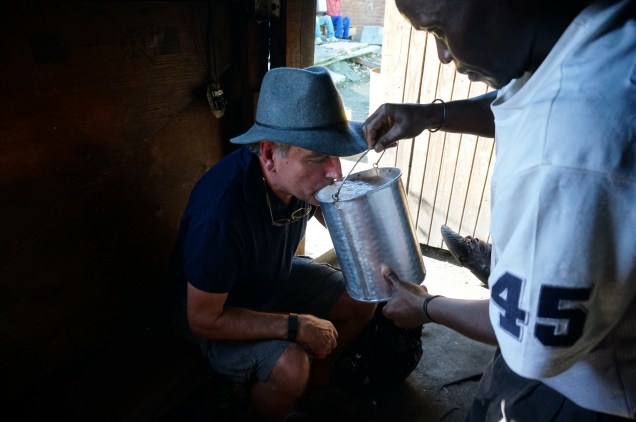
We were introduced to the ‘Mistress Brewer’. James explained that the brew was made of fermented maize. I asked where the maize came from? He told me that it now comes from “Shoprite, the Supermarket in the Township”.

Apparently the brew takes 3 days to ferment and is then ready to drink. I assumed that in the absence of any refrigeration, it is drunk on that day.
We were offered to opportunity to drink the beer. The two American blokes declined. The girl had a go. So did I. We drank it out of a bucket. I am writing this over 24 hours later. I assume I won’t have any after effects.

Different Levels of Housing

After the beer tasting, we went on a short walk. We passed some two storeyed builds. The American girl told me that the buildings did not look dissimilar to the housing that is provided to the “lower ranks of the USA military”. She told me that she knew what that was like “because her sister was married to an Infantry Man”. She said that the “USA doesn’t look after its Servicemen”.

We were taken into one of the buildings. There was a small room with bunk beds. James explained that the room was occupied by three families. The parents slept in the beds and the children slept on the floor.
As we left, the American girl said that while the building looked the same as her Sister’s place, the sleeping arrangement were “better than that”.

We then returned the mini bus.

Some New Buildings

James drove us passed some new buildings, some of which were still under construction. He explained that these were being built by the government and the plan was to “move people from the shacks in to proper buildings over time”.

We then passed some cottages. James explained that these were ‘Bank Houses’. They had been built by their owners with loans from banks. Most were owned by ‘professionals’ e.g. teachers and government workers. Some had cars parked in the front yards. These places also had satellite dishes. I asked if they there was any robberies of these houses. James said that it was rare. “Most people respect the owners and the fact they were the “same as them”.

Immigrants

James then took us into another area than was far poorer than anything that we had seen so far. It was on the fringe of the Township, near the highway to the Airport. He explained that this was where the “immigrants were”. These are people from Zimbabwe and elsewhere in Africa that “have come to South Africa for a better life”.

It is really grim.
Check out the video of Flickr.

Flickr Link
https://flic.kr/s/aHsksdAauv

Link to Christiaan Barnard
https://en.wikipedia.org/wiki/Christiaan_Barnard