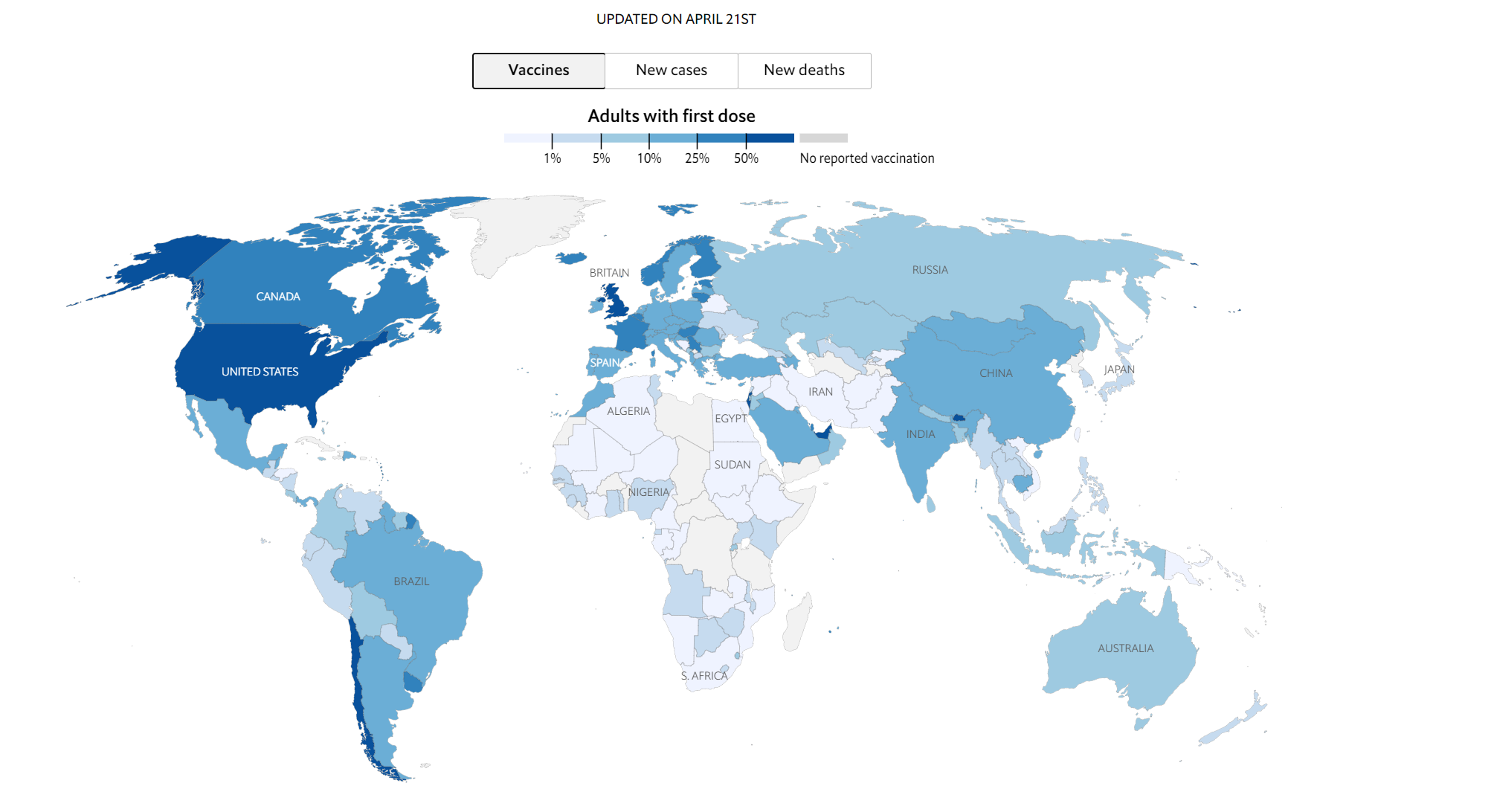
It is now well over a year since the coronavirus crisis started. This time last year I had expected to be flying to Singapore on my usual journey out of Australia which ends in London at the end of May early June. Of course last year that didn’t happen.
Stranded for One Year
For the past year I have been stranded in Queensland, first in Brisbane and since the beginning of October, in Tewantin on the Sunshine Coast.
The Second phase of the Coronavirus
It would appear that the coronavirus crisis is now in a second phase. The beginning of this phase was marked by the roll-out of vaccines against the virus.
The development of the vaccines has been a remarkable achievement. This has been possible as a result of significant advances in medical technology. The key to the development of the vaccines was the identification of the coronavirus genome. Once identified, the genome was shared among scientists around the world, including those who were looking to develop vaccines.
As work on the development of the vaccines continued, governments made some key decisions designed to assist in the acceleration of process that would ultimately lead to their availability. This included committing to the purchase and funding of the manufacture of the vaccines before they were tested.
This meant that once the vaccines were tested and approved by the medical authorities, they could be effectively rolled out immediately. The UK was the first country to approve the use of the vaccines and to commence inoculation programs. The USA soon followed as did Israel.
Two types of Vaccine
As of today, there are two main types of vaccine.
The first vaccine to be approved was developed in Germany by a company called BioNTech. This vaccine was developed using a new technique called mRNA. In simple terms, this technique involves replicating part of the virus. When this is introduced into a human body, the immune system is trained to recognise it. If the vaccinated person is subsequently exposed to the coronavirus, their immune system will attack it.
The BioNTech vaccine is being manufactured and distributed by the pharmaceutical giant Pfizer and is known as the ‘Pfizer vaccine’.
There is a second type of vaccine known as an adenovirus. These vaccines are developed using a more traditional method. This involves taking a real virus and modifying it. The ‘modifying’ process involves killing the virus and making it look like the coronavirus. When the this is introduced into a human body result is the same as the mRNA vaccine.
The first adenovirus vaccine to be approved was developed in the University of Oxford in the UK. It is being manufactured in the UK and Europe by the pharmaceutical company AstraZeneca and is known as the AstraZeneca. Another vaccine developed using this method is the Johnson and Johnson vaccine.
.Australia’s limited Options
The Australian government decided to purchase a relatively small number of Pfizer vaccines. It also placed most of its reliance on the AstraZeneca vaccine. This involved purchasing a quantity of the vaccine that was to be manufactured in Europe.
The government also encouraged the local vaccine manufacturer CSL to enter into an agreement with AstraZeneca to allow the company to manufacture the vaccine in its plant in Melbourne.
The Federal government decided that it would assume overall responsibility for the management and implementation of the coronavirus vaccination program. This involved the allocation of the vaccines and management of the distribution of them to the parties that would administer them.
The State and Territory governments were told that would be responsible for administering the vaccines to front line health workers in the public health system. The vast majority of those people were to receive the Pfizer vaccine.
Federal government’s Blame Game
It was not before this process went off the rails. This came to ahead when two heath workers in the Prince Albert Hospital in Brisbane contracted the coronavirus and passed to close contacts. It was later revealed that both workers had not received the coronavirus vaccine notwithstanding they were in the top category for being inoculated.
This prompted an immediate response from the Federal government. Bizarrely it was the Federal government minister for agriculture that led the charge. He claimed that the Queensland was inappropriately holding back the vaccines.
At the same time the NSW government went public on the problems that it was experiencing its dealings with the Federal government on the supplies of the coronavirus vaccines.
It was soon obvious that the problems with the delivery of the vaccines was the fault of the Federal government, not the States and Territories.
Meanwhile in Europe reports were emerging of people suffering serious side effects after being administered the AstraZeneca vaccine. Specifically, people were developing blood clots. In some cases, these were fatal.
In response to these cases, governments in Europe suspended the roll-out of the AstraZeneca vaccine. In the UK, the government ceased to use of the vaccine for people under 50 years of age.
The initial response from the Federal government in Australia and its top health officials was that there was nothing to worry about and the vaccines were to continue as planned.
This did not last long.
In the face of the mounting evidence that there is a risk of blood clots after taking the AstraZeneca vaccine, the Federal government announced that it will not be given to anyone under the age of 50. It also announced that it had negotiated the purchase of additional vaccines from Pfizer.
Flawed Strategy
Simultaneously, it was become increasingly obvious that there are fundamental issues with the Federal government’s strategy for administering the coronavirus vaccines to the general community. It would appear that the Federal government decided that the vaccines would be administered by General Practitioners (GPs) in their premises. The vaccines would be delivered to the GPs by two logistics companies.
This strategy is quite different to the strategies being followed in the UK and the USA. In those countries, the majority of the coronavirus vaccines are being administered in ‘mass vaccination centres’. These include school hall and indoor sports facilities. In the UK they have also been using cathedrals.
There vaccination centres are able to process hundreds of people in a single day.
I have friends and relatives in the UK who have received their vaccinations in these facilities. They have reported that whole process worked extremely well.
It is difficult to understand why the Australian federal government decided to follow what is clearly a flawed strategy for running its vaccination program. What we do know is that the government has spent millions of taxpayers’ dollars on consulting companies including PwC for advice on dealing with the coronavirus crisis.
Unfortunately, we do not know the details of these contracts. For some reason, the government has refused to publish details of the contracts on the AusTender website.
Travel Bubble
Another recent development has been the establishment of a ‘travel bubble’ between Australia and New Zealand. Under this arrangement people can travel between the two countries without having to go into quarantine. This will be a major boost for the travel and tourism industries for both countries.
The fact that the first country with which Australia has normalised travel arrangements is New Zealand is hardly a surprise to me.
New Zealand has followed a ‘eradicate the virus’ strategy. This was roundly criticised by many, particularly right-wing politicians and commentators. They claimed that the strategy would damage the New Zealand economy and destroy its tourist industry. These people have been proven wrong.
The Virus takes off in India
As I post this piece, reports are coming out of India of a huge spike in the number of coronavirus deaths and Covid-19 related deaths. India has now joined Brazil of the top of top when in comes to new cases and deaths.
I suspect that this is going to a big issue in the weeks and months ahead.
 billrider2013