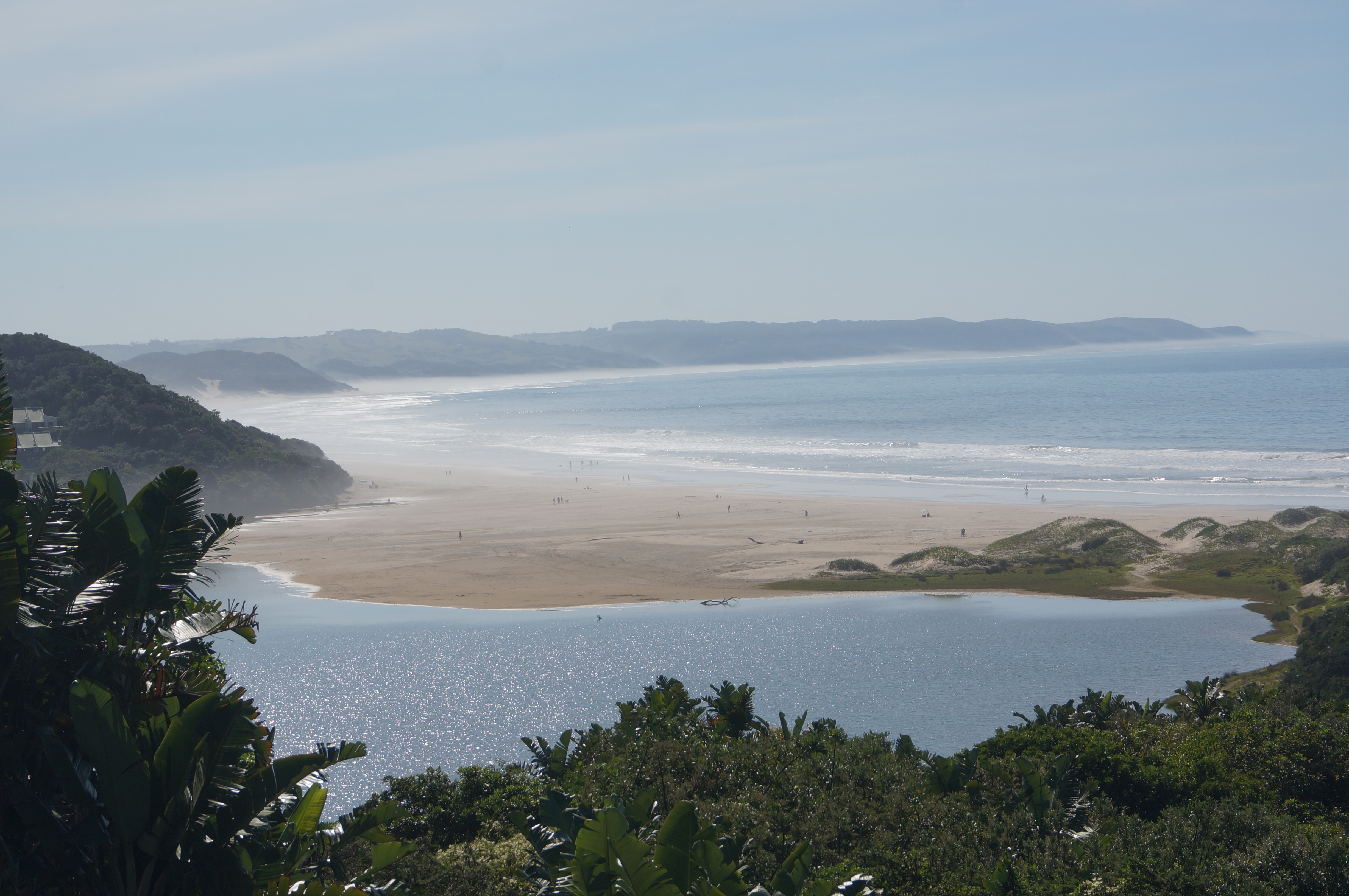
Durban

Durban

The Baz Bus collected me from the Shell Service station in Mtharta.  The bus was quite crowded.  I had meet a number of the people before.  That was to be expected as individuals and groups head along the Garden Route.

Bloke who could Talk

As well as the backpackers with ‘Hop on and Hop off’ tickets, there were two blokes that bought tickets off the driver. One looked to be in his forties and the other looked to be in his late teens.   The older bloke got into the front seat next to the driver.

As we headed off the bloke in the front seat started talking to the driver. I caught bits of the conversation.  He “owned a construction company….lived in  Ramsgate south of Durban…owned a BMW 7 Series….”

The amazing thing was that the bloke did not stop talking. His comments seemed to get more and bizarre.  He talked about “having over 20 poisonous snakes in his house” and “fatally shooting a black guy that broke into his house”.

A couple of times he turned back to say something to the teenager who boarded the bus with him.  As time went he still didn’t stop talking and seemed to be getting pissed.

One of the other passengers started to chat to the young bloke.  It transpired that the bloke in the front seat was his uncle.  The young bloke worked for his uncle’s construction company.  They had “just finished a section of new road near Coffee Bay and were heading home for the weekend”.  The reason that his uncle sounded pissed was because he was “drinking a 26-ounce bottle of vodka”.  The young bloke said “that 90% of what his uncle said was true albeit he was prone to a bit of exaggeration”.

It was about 5 hours’ drive from Mtharta to where we dropped these blokes off. The older had not stopped talking for the whole time.  They were met at the stop by the younger blokes sister, his uncle’s wife and his children.

When he was unloading his luggage, the uncle took a cloth bag out of a metal case and placed it of the ground to show his children.  It moved. There was a poisonous snake in the bag.  Maybe he did kill and black guy the broke into his house.

Nomads Hostel

I was booked into the Nomads hostel in Durban.  There was a young Australian girl on the bus that was also booked into the hostel.

As we walked through the gate that place seemed closed.  As we got closer to the main door we could hear loud music.  As we walked through the door we were greeted by a bloke with an extremely loud voice.

It later transpired that the boke with loud voice and number of other quests were in Durban for a music festival taking place over the weekend.  The bloke with the lead voice was providing sound equipment.  I was to later learn that the reason that he spoke so loudly was that he was partially deaf as a result going to so many loud concerts.;

Walking tour

In the morning I decided to take walking tour that was offered by the hostel.  I had heard about the tour by a bloke I met in Coffee Bay.  He told me that “the guide, Johnny, was very good.

Johnny was a ‘mixed race’ – Indian and Zulu.

There were four other quests on the tour, a couple from Brazil and bloke from Belgium.  The first part of the tour involved taking a local mini bus in to the city.  Passengers and the driver’s off siders use hand signals to say where they want to go and where the bus is going.  It is a bit of a chaotic system but it appears to work.

Whites leave the city

We got off the bus near a large market. Johnny explained “that area had changed significantly since democracy”.  It turned out that that was his term for the end of Apartheid.

He told us that during the Apartheid years “the downtown area was for the whites. The blacks, coloured and Indians were not allowed to live there.  The Indians were allowed to have businesses, but the blacks were not. He said that the streets were all very clean and quiet.  The blacks that worked on the downtown area had to return to their townships when they finished work.

All this changed with democracy.  Everyone was allowed to move freely throughout the RSA.  This included allowing the blacks to be able to live and start businesses in downtown Durban.  Over time blacks started business on the streets and slowly started taking over shops as the white shop owners left the area.

Johnny pointed out that we, his quests, were the only white people on the street.  He was right.

Markets

We went into a food market.  The people manning the stalls were all black.  Johnny explained that most of the stalls were owned by Indians. Some of the items on offer were ‘interesting’ – for example, goat and sheep heads.

After the food market we walked on a bridge over the railway line. It was wide and covered.  On either side people were selling CD’s and DVD’s.  They were all playing ‘music’ on ‘ghetto blasters’.  The noise was excruciating.

Next stop was another bridge where people were selling ‘tradition remedies’.  These included herd, roots of plants and animal parts.

Town Hall the same as Dublin’s

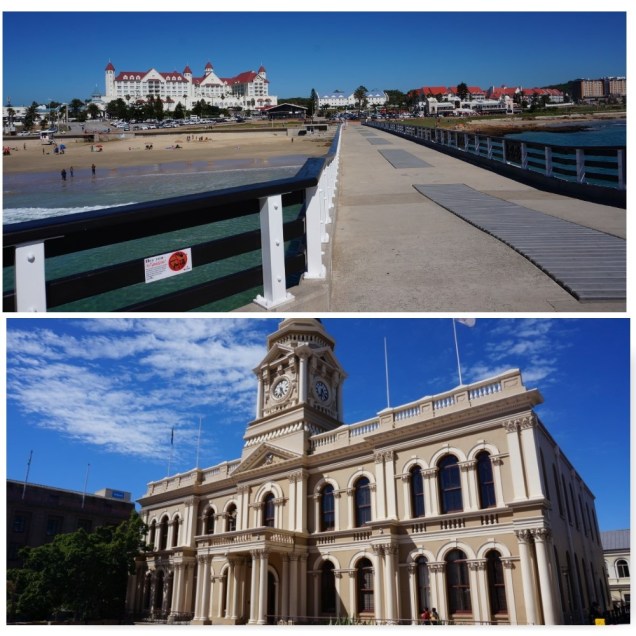
Leaving the market, we past the Town Hall.  Apparently it is built to the same design as the one in Dublin.

In the square in front of the Town Hall there are memorials to the fallen with WW1 and WW2.  Virtually all of the names are British, not Afrikaans.

Indian meal

Next stop was the beach.  We had an Indian meal at a restaurant.  It was pretty good.

Johnny explained that in summer that beach is packed with locals and people that travel to Durban from Johannesburg. He said that the people seemed to practice “voluntary Apartheid” with the whites going to the far end of the beach.

Beer in a glasshouse

We walked along the beach to an ‘entertainment centres’ that included shops, bars and restaurants.  There is a pier with a bar, that Johnny suggested was a good place for a beer.

On the way out to bar Johnny pointed out that the people swimming in the water to the right of the pier were predominantly white.  Those to the left of the pier were predominantly black.

The walls of the bar were all glass.  The sun was streaming through and it was incredibly hot.

Curry meal

In the evening, the hostel put on a curry meal.  It was really good and cheap – less than AUD 7 and the beers were less than AUD 2.

I had a chat with one of the other guest and the manager of the hostel. The guest was an older bloke who told me that he was in Durban on business.  His business was to install mechanisms that make it difficult for “gangs of blacks” stealing copper wire from the electricity network.

The conversation turned to shark attacks.  The Manager said “that the number of attacks had increased with the increase in the number of blacks that were taking to the beaches”.  The other bloke agreed.

AUD 9 hair cut

I spent most of the next day in the shopping centre that was about 400 metres from the hostel.  It had a large number of small shops and the big department stores including Woolworths (not related to the Australian company) and Ackerman.

I had a ‘full service’ haircut (i.e. cut and wash).  It cost AUD 9.

I also had a really good meal with a beer and wine for AUD 21.

The RSA is cheap.  Durban is particularly cheap.

 Flickr Link
https://flic.kr/s/aHskyNj5b6


Coffee Bay and Port St Johns

Coffee Bay and Port St Johns

The Baz Bus from East London was to take me to Mthata where I would take a shuttle to Coffee Bay.

Mandel’s House and Grave

Short of Mthata we passed through small town called Qunu.  This is where Nelson Mandela grew up.  When he retired from being  President of the RSA he built a house there.  It is also where he is buried.

The driver slowed the bus down as we passed the gate of the house. A little further up the road he stopped.  We got out of the bus.  We could look down the hill to see the house.  It is on a farm that extended into the distance.

The driver also pointed out some shrubs on hill on the property.  He told us that that was Mandel’s last resting place. It is interesting that this is still a ‘private’ place.

Shuttle to Coffee Bay

The Baz Bus dropped me off at a large Shell Service station at Mthata.  This turned out the be a transit point for a number of regional and local buses.  There were people everywhere.  The take way food shop and the mini supermarket in the complex were doing a roaring trade.

There were a couple of other people from the Baz Bus that were going to Coffee Bay. The shuttle bus was waiting. We joined some other passengers and headed off.

The route took us through the main part of Mthata.  This is very chaotic town.  It is obviously quite poor.

We continued towards the coast.  Most of the traffic was mini buses and small trucks. There were very few sedan cars.

There was a lot of road works being performed. This seems to be the case across the RSA.  I seemed to have struck at least one major piece of road work every day I have been travelling.  Typically, the work is simply resurfacing the road.  This involves closing one lane.  What is really odd is the length of the lane closures.  Some are over 2 kilometres long.  This results in long waiting times as the oncoming traffic passes.  The really odd thing is that actual work is being performed on a very small part (typically a couple of hundred metres) closed section of the road.

Coffee Shack

There are a number of hostels in Coffee Bay.  I had heard that the Coffee Shack was the best.

The place seemed to be very popular – it was fully booked.  Most of the quests were young and were in Coffee Bay to surf.

The hostel offered dinner.  This there were only two options – vegetarian and non-vegetarian.  The vegetarian option turned out the be the non-vegetation option without the meat.

Walk in the Village

One of the activities that the hostel offered was a tour of the Coffee Bay village.  I decided to take the tour.  As it turned out, I was the only participant.

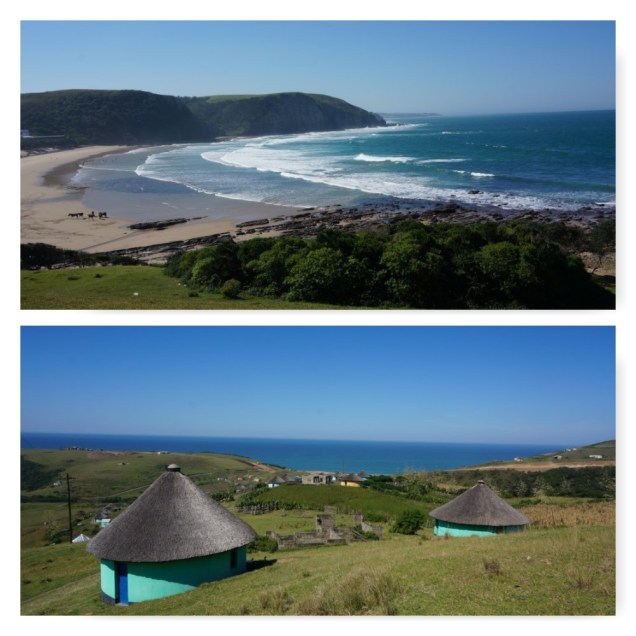
The guide was a young bloke from the village who worked in the hostel.  His name was Jesse. As we headed off he explained how the village worked.  The village was basically the houses that we could see.  They were spread out, 300 to 400 metres apart.  There was ‘Mayor’ of village.  This an elected position.  His role is to sort out any disputes, e.g. the allocation of land and any disagreement about the use of the land e.g. fencing off areas to plant corn.

There is a chief of the area that includes the Coffee Bay village.  This is a hereditary position.  The Chief’s area of control covers 20 villages.  The Chief’s role includes sorting out any issues that cannot be solved by the Mayors.

We walked past the village school, Jesse told me that he attended the school.  He said that the students were taught in the local Xhosa language.  “The idea is that they are taught English, but is difficult to find teachers who can speak good English”.

As we walked along we came across a white bloke walking in the same direction.  Jesse clearly knew him and they started to chat.  The white bloke told us that he had “found a house in the village and was very happy”.  He turned off the path.

I asked Jesse “who was that guy”?  He told me that he was from Johannesburg and was working one of the hostels in the village.  It was interesting to see a ‘white’ who had gone ‘native’.

After a short distance, we came across a group of houses. There were a group of people sitting in chairs outside one of the houses.  Jesse spoke to them in Xhosa.  He introduced me to the people.  One was his father, two were his sisters and there were a couple of older female neighbours.

No Electricity

As we walked off I asked Jesse if his house had electricity.  He told me that it didn’t because “his father and the other elders of the village were against having it in the village”|.  I said “but I can see electricity wires on the hill”.  Jesse told me that “the village could have electricity, but the elders asked that government not the link the houses to the grid.  There is only one house that has electricity, and that was owned by a German bloke who has married a girl from the village”.

We actually passed the German blokes house.  Apart from having electricity, it looked like all the other houses in the village.  Apparently the German was a doctor who met his wife while working in the local clinic.

Face painting

Next stop was place where the locals get mud that they use for face painting.  Jesse explained that in the past it was used for ‘war paint’.  Now it is used for sun protection.  Apparently it is very effective.  Given my skin issues, maybe I should have painted my face with mud in my youth.

Mud Bricks

We also passed a place where some of the villagers were making mud bricks to the used to make a house.  Jesse told me that if the house is properly maintained, it can “last forever”.

Tradition Meal

Towards the end of the walk, we stopped off for a late lunch in a village house.  The meal consisted of corn meal and vegetables.  Jesse explained that it is the staple diet of the people.  They basically eat the same meal every day. If someone in the village kills a goat or another animal they will share it will others, as there is no way of storing it.

Blokes wanting a “contribution”

Later in the afternoon, I when for a walk to the main beach.  As I returned I was meet by two blokes in their teens.  They chatted a bit in broken English:  “where are you from? “ and that sort of stuff.

They then asked me “if I would like to make a contribution of 100 Rand? I told them politely that I would not.  It was a bit threatening.

More Dutch

Back at the Hostel I had dinner.  It was better than lunch.  I chatted to a young Dutch couple who were studying at the University of Stellenbosch.  The girl was very striking.  I wondered if she had a sister who was in Koh Tao in Thailand in August 2012

Back to Mthata

In the morning the shuttle bus took me back to Mthata.

There was another older bloke on the bus.  He spoke with a southern USA accent.  He told me that he was “George for Georgia”.  He said he had only recently started travelling outside of the USA.  He was an interesting bloke.

The shuttle bus dropped us off at the Shell service station.  From there a ‘local’ mini bus was to take me to Port St Johns.  I had been told by the hostel in Port St Johns to “wait the fast food restaurant and the driver will find me”.

As I was sitting drinking my coffee, I heard a girl speaking in French accent chatting to a waitress.  She seemed worried about a bus being late.  I asked her where she was headed.  She said that she was going to Port St Johns. She seemed quite distressed. We were staying at different hostels and she could not get hold of her hostel.  I said I would call mine. As it turned out were to take the same mini bus.

Local Bus

Finally, a bloke emerged asking for passengers for Port St Johns.  We got on the bus. This was my first ‘local mini bus’ ride, albeit I had seen them and read about them.  They are almost all Toyota vans.  As well as the driver, there is an ‘off-sider’ who calls outs (I assume telling potential passengers where the bus is going).  The offsider also collects the fares.  The objective appears to be to maximize occupancy at all times.

As we went along I chatted with girl with French accent. Back at the Service Station, I had assumed that she was an inexperienced traveller.  I could not have been more wrong.  She was from Belgium had been travelling for over 5 months from Kenya south.  She had previously travelled in South America, Asia and Australia and New Zealand.  She speaks French, English, Dutch and Spanish.  Her plan was to do the 60 kilometre walk along the coast from Port St Johns to Coffee Bay.

Port St Johns

It took ages to get to Port St Johns – dropping passengers off and getting new ones.

The hostels that the Belgium girl and I were staying at were quite a way out of the town.  My place was very alternative. It was run by a white South African who appeared to be constantly stoned.  A number of the quests appear to have the same interest.

The owner of the hostel has pet donkeys that roamed all over the place, including into the bar area.

I spent a couple of days in Port St Johns not doing too much apart from reading and walking. One of the walks took me into the National Park.  It was interesting to see.  There were about 30 huts for accommodation.  The only thing was that there didn’t appear to be any guests.

To Durban

I caught a local bus back to Mthata where I was to take the Baz Bus to Durban.

Flickr Links

Mandela House

https://flic.kr/s/aHskypSB5R

Coffee Bay and Port St Johns

https://flic.kr/s/aHskyqKBDE


Chintsa

DSC05691 

I had a good time in Hogsback.  My next stop was Chintsa which is on the coast north east of East London.

Using Baz Bus required that I took a shuttle back to East London and wait for the bus at the, previously mentioned, Shady Shack Hostel. I chatted to a young English couple who had stayed there.  They confirmed that it was a “dodgy place in a dodgy area”.

Staying at Buccaneers

I had booked into a place called Buccaneers in Chintsa using Expedia.  I am not sure what I, or they did, but I ended up with a cottage all to myself.

Chintsa turned out to be a very small place. Buccaneers is sort of a resort, albeit a bit basis. It has a swimming pool with a café, a bar and restaurant.  There seemed to be more staff than guests.

Another Cattle Encounter

I had a late lunch in the café by the pool.  There was a group on cows in a paddock beyond the pool.  One was making a loud bellowing noise.  The girl in the café explained that its calf had escaped from the paddock and it was probably at the beach.  The “mother was calling to it”.

After the lunch I walk down to the beach. This involved going through a gate and down a narrow path that led to a wood bridge that crossed a small stream that flowed to the beach.  I crossed the bridge and continued along the path.

As looked along the path I could see a ‘not too small calf’ heading my way.  I turned and ran back to the bridge, thinking the calf would not cross the bridge.  I was right about that.  It simply ran through stream and up the path to the gate.

I headed up the path. I could hear both the cow in the paddock and the calf bellowing.

As I neared the gate the calf suddenly came out of the bushes beyond the gate.

It started to come towards me, but suddenly stopped.  The gate was open the it ran through it.

I walk up the gate.  One that staff from café was at the gate laughing her head off. She and seen me react as the calf came towards me. I obviously looked as scared as ‘all get out’.

She said “he is just looking for his mother”.  She had heard him bellowing and came out to open the gate.  As she did, he ran straight past her to the paddock.

In hindsight it was obvious that all the calf wanted to do was get to its mother.  It wasn’t interested in me except that I was on the same path.

Good Meal

In the evening, I had a meal in the restaurant.  That was the only place to eat and there was only one option on the menu – barbequed meat and salad.  It was very good.

All the quests dined at one table.  The conversations we interesting. Two of the guests were young lawyers from Cologne in Germany.  Naturally the ‘New Year’ incident came up.  They said “it was serious, but it will be the problem with the migrants will be resolved because Germany has good processes”.

Great view

The breakfast was served in the restaurant.  Has a really good view towards the beach.

Walk and Quick Dip

I went for a long walk on the beach and had a quick.  The water was much warmer than Jeffrey’s Bay, but still cool.

Friday night

It was Friday.  I ate in the restaurant again and went to the bar after the meal.

The place was ‘packed’.  The barman explained that the ‘locals’, come to the Buccaneer’s bar every Friday because it is “the only place there is”.

The ‘locals’ were a bunch of young and old, and male and female.  They seemed to three things in common: they were white, spoken Afrikaans and could drink like fish. Oh and one other thing: they all smoked.

To Coffee Bay

I had time for a walk in the morning before the Baz Bus arrived to take me to Mthatha where I was to catch a shuttle bus to Coffee Bay.

Flickr Link

https://flic.kr/s/aHskyiJZs9


Kenton on Sea and Hogsback

Hogsback

After leaving Port Elizabeth I travelled to a small town called Kenton on Sea.

I had booked into a place called Woodlands Cottages.  It turned out to be a couple of kilometres out of town.   The Baz Bus took me to the front gate and the driver entered the code to open the gate.

I headed down to long driveway soon to be greeted by three dogs – one very large and two small fluffy things.  The large dog was very placid.  The little dogs yapped like crazy.  I was later find that they were “part Jack Russell”.  Those terriers are so annoying.

Woodlands turned out to be an old farm house.  The cottages were accommodation for the farm workers when it was a working farm.

The bedrooms of the main house had been converted into dormitories.  I was the only quest for this type of accommodation.

Walk into town

I was hungry and walked into town looking for food.  There were only two place to eat.  One was a bar of the beach that only served pizzas.  The other place was a rather up market café in the ‘CDB’ (there was sign telling to the direction to the CBD).  The food in the café was really good.

West Indies win the T20 World Cup

That evening I watched the T20 World Cup final between the West Indies and England.  I suspect everyone reading this knows what happened.  What an amazing finish!!!!!!  Great for West Windies cricket and the T20 game.

Hire a bike

The next day I hired a bike and went for a ride into the town.  It was good to be back on a bike again.  I am really looking forward to being reunited with my Cannondale in June.

To Hogsback

My next destination was Hogsback, which is quiet away inland from the coast.

The Baz Bus dropped me off at the Shady Shack Hostel in East London.  It seemed to a very appropriately named establishment. It looked very dodgy.  I was to be picked up there by a shuttle that would take me to Hogsback.

As I waited I when for a short walk along the path next to the beach opposite the hostel.  There was glass and litter all over the place.

Within an hour, the shuttle arrived.  There were two other people, a Spanish girl and a Norwegian bloke booked on the shuttle. The driver told us that we would be stopping at a shopping centre “to collect some supplies” before continuing on to Hogback.

The shopping centre was very big, not dissimilar to anything you would see in an Australian suburb or regional city. The vast majority of the shoppers were white.

The supplies turned out to flour and other cooking ingredients for the hostel.

Large Township

As we headed out of the city we passed a very large ‘Township’.  The driver told us that it was the second largest ‘Township’ after Soweto which is outside of Johannesburg.  The Norwegian bloke asked “what is a Township? I was very surprised at the question.

Into the Xhosa Homelands

One of the features of the Apartheid system was the establishment of ‘Homelands’.  These were areas where the native tribes like the Xhosa and Zulu people could live.  A black person had the ‘right’ to live in a particular ‘Homeland’ based on their ethnicity.

The ‘Homelands’ effectively operated as ‘countries’ within the larger South Africa. Movement between the Homelands and the big cities in South Africa was controlled.  The vast majority of jobs for the Blacks in the Homelands were in the big cities like East London.  The Blacks were allowed to come into the cities to work, but were not allowed to live there.

The area inland from East London including the Township are part of the former Xhosa Homelands of Ciskei and Transkei.

Since that fall of the Apartheid, that Homelands system and the related controls of the movement of the black people has been abolished.  This may well the case, however the physical remnants of the system remain.

East London and Hogsback are in Eastern Cape.  It is the poorest of the RSA provinces.  The contrast with Western Cape which includes Cape Town is extreme. The countryside of the Western Cape looks very much like Australia.  There are large farms that appear to be highly automated.  There are a lot of Black people, but they appear to living mainly in the Townships near the big cities or in the major towns.

The area we were passing through west of East London is very different.  As well as the ‘Townships’, the local Black people live in small houses that are dotted all over the landscape.

The driver explained that these “groups of houses are villages”.  Each village has a Chief.  The Chief decides who can live where on the land and how many houses and other buildings they can build. Most of the families own some animals, typically cattle, goats, sheep and chickens and have a small plot on which they grow corn and other vegetables.  It is common for the males of the family to move to other areas of the RSA to work in factories or the mines.  Others commute to East London for work.

Up to Hogsback

Hogsback is in the Amatola Mountains.  It is perched above the Tyume valley.  It is the classic ‘mountain retreat’.

I was booked into the ‘Away with Fairies’ Hostel.  I heard a lot of favourable reports about the place from other travellers.

Apparently the writer JRR Tolkien used to visit Hogback and it is thought that surrounding  scenery inspired him when he was writing the Lord of the Rings books.  There are a lot of references to the books and the characters in the town e.g. Bilbo’s Cottage.

MTB Ride

The main activity to do in Hogsback is hiking.

Another activity is Mountain Bike (MTB) riding.  There is company that offers MTB tours that include some abseiling down a cliff.  I booked myself a tour.  Unfortunately, I was the only PAX and the tour was cancelled.

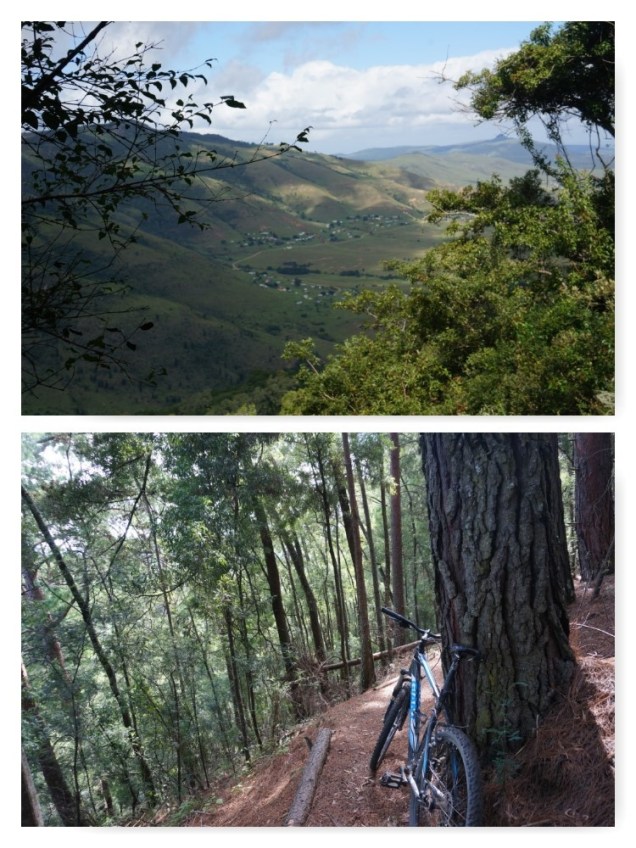
My only option was to hire a MTB go for a ride by myself.  The bike shop provided me with a map detailing a route through the forest on 4WD roads and single MTB tracks. It turned out to be a good little ride.  I took it very carefully on the ‘technical’ parts of the single tracks.  I didn’t want to have a heavy fall, when it was likely that no one else would be around.

On parts of the ride, I came across quite a few cattle, mostly cows.  At one point I came across group that included a bull. As I approached he bellowed and started pawing the ground.

I skipped that part of the trail.

More Good Food

Hogsback has some really good restaurants.  I found one place in particular that was really good.  They also sold a very nice craft beer.

Being Cool

Because it is high in the mountains, Hogsback gets snow in winter.  As it is only early autumn it isn’t too cold at the moment, but it is still pity cool.  The hostel and the restaurants all had open fires.

One quirky facility at the hostel was a wood fired bath on cliff overlooking the valley below.

Flickr – Kenton on Sea

https://flic.kr/s/aHskusPhLt

Flickr – Hogsback

https://www.flickr.com/gp/twwilko_photos/q0bq2X

Port Elizabeth

Port Elizabeth

I ended staying in Port Elizabeth for three days.

It not the most interesting of cities, but It was a good place to take a bit of a pause. As I noted in my post about the Addo Elephant Park, it is one the major industrial centres in the RSA.  It has two ports and automotive manufacturing and assembly plans.

Hostel

The Island Vibe Hostel is in one of the richer suburban areas on the beach. It is a house that has been slightly modified to be a hostel.  It is a very large house with a pool, Jacuzzi, a huge kitten and very large bedrooms.

The owners, an Indian couple, told that me they had bought the house with the specific intention to convert it into a hostel.

Walk along the beach

The hostel was about 700 metres inland from the beach.  There is boardwalk that runs along the beach.  It was late afternoon when I checked in and the owners of the hostel told me that  there was a good restaurant about 500 metres along the beach.

They said that it would “be fine to walk there, but if I was still out as it was getting dark, I should probably get a taxi back home”.

The board walk was very popular with lots of people, almost exclusively white, walking, jogging or cycling.

I found the restaurant and had a reasonable meal.

Walk into Downtown

The next day I decided to walk into the downtown area, which is about 5 kilometres along the beach from the hostel.

As with the previous evening there were a lot white people walking and jogging.  There were also a reasonable number of people various parts of the beach.  There was a number of cafés and restaurants near a pier.  Further along, I found the casino and large sporting complex on the beach.

As I approached that downtown I passed some old fuel tanks and dilapidated rail lines.  There were very few other pedestrians and was definitely the only white person walking.

To get into the downtown area you have to pass under highway overpass.  There was broken glass all over the footpath and a strong smell of urine.

The downtown area has some impressive old buildings.  However, it does have the feeling of being run down. The shops were selling ‘cheap’ item including very basic clothing.  I decided to walk back to the ‘first world’.

Yet another Good Lunch

Found a really good restaurant near the pier.  It is almost impossible to spent more than AUD 30 on a meal and a couple of drinks.

Casino

I checked out the casino and the adjoining hotel.  It is fairly flash.  There were the usual miserable people playing poker machines.  Gamblers are the same the world over.

I noted that there was desk were you could leave your guns.  Hmmmm.

Flickr Link

https://www.flickr.com/gp/twwilko_photos/1949Ys


Addo Elephant Park

Addo

The main reason for staying Port Elizabeth was to visit the Addo Elephant Park.  The park is located about 50 kilometres from the city.

I organised a tour of the park through the hostel.

Pick up

I was picked at the hostel by the guide, a bloke called Craig.  We stopped to pick up five other passengers before heading out of town.

As we dove along, Craig told us a bit about Port Elizabeth.  It is a major industrial centre with a large deep water harbour.  There are two dock areas, one in near the CBD and another, newer port, about 15 kilometres away.  Craig said that the plan was to move all of the ‘dirty activity’ from the CBD port to the newer port and redevelop the city port into a ‘green precinct.

New Industrial Park

As part of the new port development, the government has established a new industrial area. We passed through this area on the way to Addo.

Early settlers killed the Animals

As we approached the Park, Craig told us about the history of the park and why it had been established. Apparently the early British settlers in the area killed a huge number of elephants, lions and other animals as they established farms.

The elephant population was reduced to less than 20 and the lions were killed to the point of extinction.

In 1930, it was decided that “enough was enough” and the government established the Addo Elephant with the view to saving the remaining animals and re-establishing the numbers.

Over time that elephant numbers increased and in ???? it was decided to introduce lions into the park.  It was determined that a species of lion from Namibia was that closest to the original species.

It the early 2000’s it was noted that most of the female elephants in the park did not grew tusks. It was believed that this was due inbreeding.  It was decided to import some male elephants from the Kruger Nation Park in the north of the RSA.  This seems to have been a success and the female offspring of these bulls are growing tusks.

Into the Park

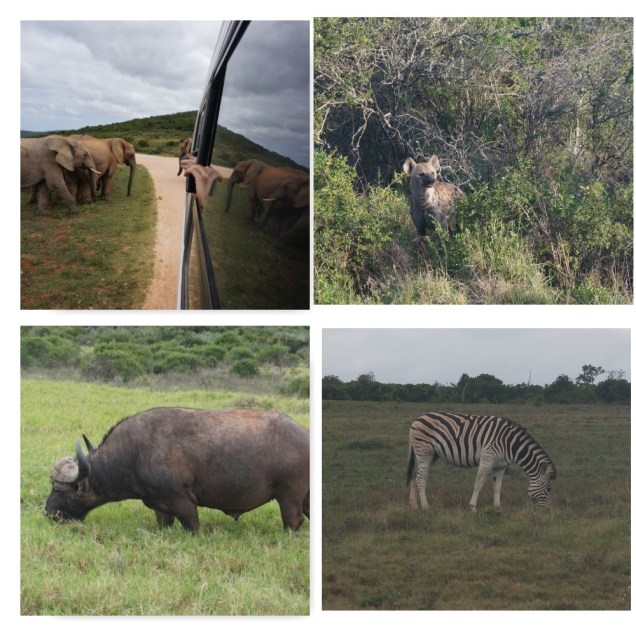
We were not in the park for long before we sighted our first elephants.  There were at a water hole near the road. Craig explained that there are few natural streams in the park and the rangers have built water holes using artesian water.

As well as the elephants, we saw zebra, antelope and lots of warthogs.

Craig explained that the trick to seeing as many animals as possible was to travel along the roads as much as possible.

The park is large.  In all it coves over ???? hectares, the diagonal distance across is over 200 kilometres. Over the years, the park has been expanded as farmers on the adjoining lands have been willing to sell to the government.

As we drove along, we spotted a lone buffalo.   Craig explained that it was an old bull.  Most of the buffalo live in groups with multiple families, however, as they get older the bulls tend to leave the groups and travel alone.

Off to see Lions

At one point Craig received a call on his mobile phone.  He told us that the call was from another tour guide that had spotted some lions.  The place was about 30 minutes’ drive from where we were.  This was an opportunity not to be missed.

The area where the lions had been spotted, was a new part of the park which had formerly been farmed.  Most of the ‘natural’ parts of the park are covered by thick bushes.  The previously farmed areas were largely cleared.

Craig spotted the mini bus owned by the guide who called him.  We knew that we in the right place.  Craig quickly surveyed the scene and spotted the lions.  There were three lions on hill about 500 metres from where we were on the road.

Craig told us the that were a “lioness and two teenage cubs – a male and female”.  He passed his binoculars so we could be a better look of the animals.

As we watched, one of the lions, the male started to move down the hill.  Craig pointed out that appeared to be heading towards an antelope and was grazing at the bottom of the hill.

As we watched, the lion moved from one small bush to another.  It was fascinating to watch.  Craig explained that he had been seeing this family group of lions since the cubs were born.

Male cub is not likely to have a good time.  There are two other adult males in this part of the park. Craig told us that they are unlikely to accept that young male when he is fully grown and will drive him away or possibly kill him.

No Lunch for this Lion

The young lion moved further and further down the hill.  We could see the antelope that he was head for another about 200 metres to the left.  Craig told us the it is “likely that one of the antelopes will spot the lion soon”.  They will they will make a load “bellowing noise to warn other Antelopes that there is danger”.

Craig was right.  One of the antelopes bellowed and they ran towards each other. Craig told us that the lion was probably not strong enough to take on an antelope at this stage.  He certainly would take on two.

Lunch

We had watched that lions for over an hour.  He did not get to have lunch, but we did. There is a really good restaurant in the main camp of the park.  The food was excellent.

Big Elephant

In the hour after lunch we actually saw nothing.  Craig was rather apologetic about the “lack of sightings”.

However, all was not lost, we came across a group of elephants including one of the bulls that had been brought down from Kruger National Park.  He is a seriously big boy.

Hyena

As we were heading back to the exit of the park we came across a hyena.  Craig explained that this is a “rare sighting”.  We were lucky.  Check out the Flickr link.

Back late

It was after 7.00 p.m. when we got back to Port Elizabeth.

Flickr Link

https://flic.kr/s/aHskxHVDWr


Knysna, Plettenburg Bay and Jeffrey’s Bay

Knysna

Wilderness was good, however it was time to move on.

The thing about the Baz Bus is that while it has lots of advantages, it is restricted in there is only one bus heading in each direct along the Garden Route.  This means that it you can almost most spent a day travelling a very short distance.

Knysna  

My next stop was Knysna which is not far from Wilderness. I was difficult to get accommodation due to the Easter weekend and the school holidays. I got a place at the Knysna  Backpackers, but to move to another place after one night and them back down the coast to Myloi Beach on the third night.

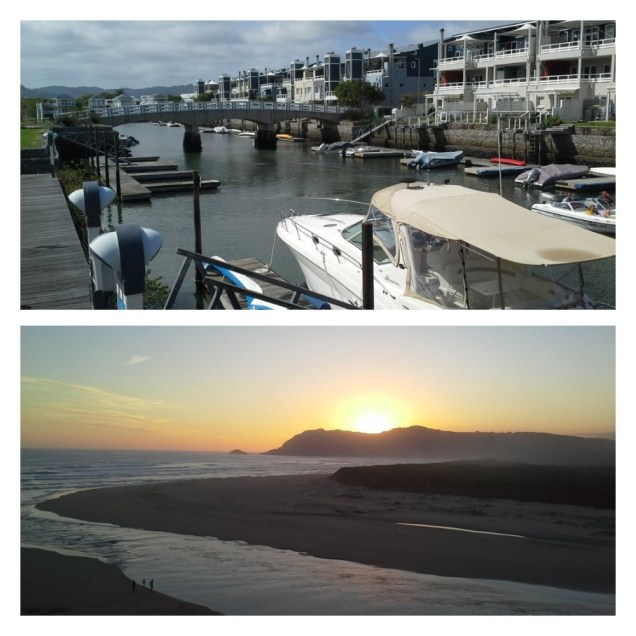
Knysna located on very large lagoon.  It is a big tourist and fishing town.  There is an island very near to the CBD.  A ‘gated residential’ development has been built on the island.  It is very new. Walking around, it would appear that there are still a lot of the places yet to be sold.

I had a meal in restaurant on the island on my first night.  The place was full of older people with what appeared to be two other generations of their families. I suspect that a lot of wealthy South Africans have decided to retire in the town.  The ‘three generations’ thing were their children and grandchildren paying a visit on the holidays.

Myloi Beach

I actually had to back track to get to Myloi Beach which is part of Sedgefield.  I had booked a shuttle through the hostel.  When it arrived, I was greeted by the late middle aged driver and woman who was feeding a baby.

As we headed off, the bloke explained that the woman was his wife and the baby was his granddaughter.  They were looking after the baby because its mother, his daughter was at work.  He told me that he and the family had moved from the Orange Free State to the Western Cape, because “it was the only providence that was not going to the dogs”.  I asked him what he did in the Orange Free State.  He told me that he that he and his wife “ran a Funeral Business”.    They had decided to settle in Sedgefield and as a retire job, run mini-bus shuttle/taxis service.

I asked him if he expected Uber to start in the area.  He said he hoped not as that would mean “more blacks driving taxis”.

I turned the conversation to rugby.

Sedgefield is very small.  There are a lot of very large holiday houses.  The people in the hostel told me that some of the houses “are hardly ever used by their owners”.

Plettenburg Bay

My next stop was Plettenburg Bay.  This is another tourist place, but with other industries and a sizable black community living in ‘townships’ out of the main town. Again the issue of safety at night arose.

It was recommended by the staff in the hostel that “you don’t walk around the streets after twilight”.

On the first night met an English woman who worked for the British Olympic Canoeing Association. Without being rude, it was obvious that her role was administration, not a sport related role.  It was interesting to talk to her for about an hour.  After that, the ‘gin and tonic’ had taken its toll.

I spent a couple of days in Plettenburg Bay, mainly walking on beach, with an occasional dip.  The water was ‘cool’ to say the least.

Jeffrey’s Bay

It was quite late when I finally got to Jeffrey’s Bay.  This is a well-known surfing spot.  I had heard that the Island Vibe Hostel was a ‘party place’ and decided to book a private room away from the main part of place.

There were lots of young Europeans and Brits in the hostel to learn how to surf.  I chatted to a couple Australian blokes who were earning their keep by being surfing instructors. They told me that they were having a “seriously good time”. Looking at some their female students, I could see why.

The beaches in Jeffrey’s Bay are really good.

I found a really good restaurant near to the main beach called Kitchen Windows.   It didn’t seem to have any competition.

Next stop was to be another big city – Port Elizabeth.

Flick Link

https://www.flickr.com/gp/twwilko_photos/j4zrdp


Wilderness

DSC05592

I left Hermanus about mid-morning. A local taxis took me to the Baz Bus pick up point about 40 minutes out of town.

The driver was an interesting bloke.  He told me that he was from Zimbabwe and had living in South Africa for five years.  He had left Zimbabwe because “the economy was so bad”.  He had worked at a number of jobs before getting the job as taxis driver.  His wife worked in a restaurant in Hermanus.  His two children were at school. He said that it was “easy to get a job because the South Africans did not want to work”.  He said that he hoped to go back to Zimbabwe at some time, but he “will wait and see what happenes when Mugabe dies”.

Travelling through Moules Bay

The Baz bus was almost full.  We passed through Moules Bay.  It is another place where you can do the Great White Shark dives.  However, I had been told that it not a very nice place to stay.  That advice seemed right.

The countryside before and after Moules Bay reminded me of much of western NSW.  There are a lot of eucalyptus trees and wide open paddocks.

Stop in George

We stopped in another large industrial own called George for a late lunch. There was wasn’t much on offer except for McDonalds and some very ordinary cafes.

In Wilderness

It was mid-afternoon when we arrived in Wilderness.  I had decided to stay in hostel that is inland from the own on the advice of the staff at the Hermanus Backpackers.

It was an interesting place with a mixture of accommodation options, including camping sites, dormitories in an old house and some small cottages.

The owner was a bit of a character.  He was very vague and a bit ‘alterative’. The place was largely staffed by backpackers who worked there for no money – they  got free accommodation, food and drink at the bar.

I later found that there were a couple of staff at least working in the bar that seemed to be drinking more than they were serving.  The place ran on cash.  I am not sure if the owner saw all of the cash.  In fact, I am sure he didn’t.

Discussion with Israeli and German Girls

When I checked in,  I was  told that I could book and evening meal.  I took up the offer.  The meal was due to begin at 7.00 p.m. The owner was in charge of the cooking.  We sat down to eat at 8.30 p.m.  The fare was barbequed meats and lots of it. Lots of wine and beers was drunk before, during and after the meal.

At the end of the meal, I got into a conversation with a young Israelis girl and an older German girl who was in her final year of studying medicine.  The Israelis was  incredibly intense.  She seemed to constantly want bring the conversation back to ‘terrorism’ and how “dangerous the world was”.

I later spoke to the German girl about the experience. She said that the Israeli girl “need to take a happy pill”.

Getting Advice about a Park

Over breakfast in the morning, I got into a conversation with an English woman from Brighton who was close to my vintage. She told me that she had rented out her house and “was on an adventure”.  She had been volunteering at animal parks in South Africa.  She organised it all from the UK over the internet.  The arrangement is that you work in the parks in exchange for “free accommodation and in some case free food; however, that was not always the case”.

She said that the best place she had worked was the Addo Elephant Park near Port Elisabeth.  I was glad to hear this as this was a place that I had planned to visit.

Kayaking

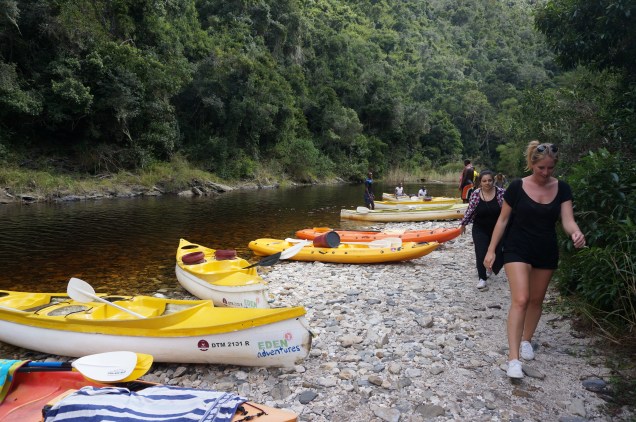
The hostel has kayaks for hire.  The main trip to take in the kayak is up the  nearby river to a waterfall.  The woman from Brighton said she was doing the trip that day. I decide to do it as well.

As it turned out there were about 20 people doing the trip.  The Brighton women said she wanted to “have her own kayak”.  The kayaks were stored in the grounds of the hostel and were carried to river by trailer which carried 6 kayaks at a time.

I was in the last group to be taken to the river.  The women from Brighton was in the first group.

I also ended up in my own kayak.  There were 3 other kayaks each with 2 in them in my group.

We headed off up the river with a strong tail wind.  There were a number of large houses on the river.  They seemed to be holiday houses.  We also passed an ‘Adventure Camp’ that also had a lot of kayaks and canoes on the lawns by the river.

Before we had headed off the hostel member who took to the river said that “if we were tired coming back, we could leave to the river at the Adventure Camp and walk a back to hostel”.

We had been told that it would take about an hour to an hour and half to the point where we would “beach the kayaks and walk to the waterfall”.

The river passed at large camping ground and there were a lot of people heading in both directions in canoes and kayaks.

After a while the we were in large gorge and the tail wind dropped.  I asked a some passing canoeists “how much further is was to the waterfall’?  They said it was “about 30 minutes and then you have a long walk”.

We finally made it to the beach were you leave the kayaks and start the walk.  As it turned out the walk is about 2 kilometres along a well-made a track and boardwalks.  There were a lot of people at the ‘waterfall’ including the woman from Brighton who was sunning herself.  She asked me “what had taken me so long”. I asked her why she had “preferred to be by herself in the kayak”.   She said that she was a competitive rower and paddler and didn’t like being the same boat as people who didn’t know what they were doing”.

The waterfall was a bit of a disappointment.  This part of South Africa is experiencing a serve drought and the water level of this river is very low.

Not able to make it back

I decided to head back to the river and left the Brighton woman sunning herself.

Back on the river, it took about 30 minutes to get to point where you leave the gorge.  I was travelling with some other kayakers from the hostel – they were all ‘two to a kayak’. As we left the gorge we were hit by the wind.  It had certainly increased significantly since the trip up the river.

I found it really difficult going.  With no one in the front of the kayak it was difficult to keep it going in the right direction.  As I struggled along, I heard a voice saying “do you want a tow”.  It was the woman from Brighton.  She passed me with relative ease.

I battled on passed the camping ground.  Albeit, she passed me easily, I could see the woman from Brighton ahead in the distance.

The river made a number of turns.  It was possible to avoid the worst of the wind by staying close to the one bank.

As I approach the Adventure Camp the wind become incredible strong.  People that were obvious from the camp were struggling to get their canoes cross the river. I noticed a number of the kayaks that belonged to the hostel were on the lawn in front of the Adventure Camp buildings. Tried as a might I could not make headway into the wind.  I gave up and beached the kayak and dragged it up onto the lawn.

There were two couples on the lawn with the hostel’s kayaks.  I asked if they were going to try to go on.  They said “no way”.  I asked them if they knew how far it was to the hostel.  They said that they had asked and “it was just next door”.

Anyway we put the kayaks together with two others that were clearly from the hostel and headed down the driveway.

As it turned out, we had been driven quite a long way down the river from the hostel to point where we had entered the water. The advice that the hostel was “just next door was right”.  Back at the hostel I found the woman from Brighton in the reception.  She said “how did you get hear so quickly”.  I told her that I couldn’t get around the bend near the Adventure Camp due to the wind and had left the kayak there”.  She said “so did I”.  That made me feel better.

Nasty Neighbours

Over a beer with hostel owner, in the evening, we were told of his ‘prickly’ relationship with the operators of the Adventure Camp.  They saw him as competition and had tried to stop him hiring kayaks to his guests.  They had also tried to stop quests beaching on “their part of the river bank”.   That was why we were taken to a “public piece of land to enter the river”.  Unfortunately, it is often the case that “afternoon sea breeze makes it difficult to get back to the starting point”.  He often has to collect his kayaks from the Adventure Camp”.

Great Lunch

I had a quiet time the next day, including a leisurely walk into the village of Wilderness and am excellent lunch.

Flickr Link

https://flic.kr/s/aHskxBmhSp


Hermanus and the Shark ‘Dive’

Hermanus

It is only a short distance from Stellenbosch to Hermanus, however it took most of the day to travel there.  First was the shuttle to the Baz Bus stop, then there was the short ride on the bus and then another shuttle (by taxi) to Hermanus.

Hostel

The Hermanus Backpackers turned out to be a good place.  The manager told me that he his wife had owned the place for seventeen years.  It showed, they know what they are going.

The hostel has a resident Staffordshire Terrier called Jock.  He is real character and checks out all the guests.  They also have two cats.  One is huge.  Check out the Flickr link.  The owner told me that they had asked that vet why it was so fat.  The vet told them with a laugh that “it certainly wasn’t from the food it got from hunting”.   Its size is a mystery.

Old People

Hermanus is a holiday and retirement town.  Its peak season is in December and January, when people come from all over the RSA to stay.

I had, of course, missed that peak season.  This has left the retirees.  I felt really young in the town.

Despite the fact that there were not mainly tourists around, all the restaurants appeared to be open.  I had some really good meals.

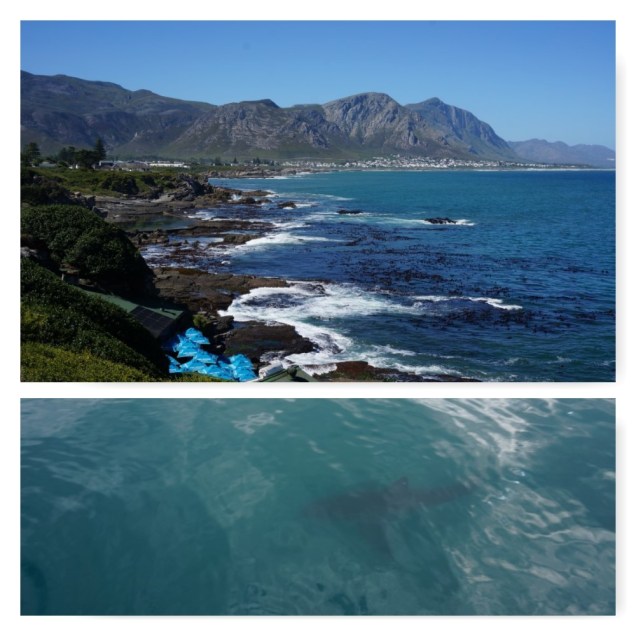
On the afternoon of the first day, I went for a walk along the path that runs about 9 kilometres along the coast.  The coast line is very spectacular,

German girls attacked

There was a bit of drama in the evening.  Three German girls were attacked by two blokes near the hostel.  They were roughed up a bit and their bags were taken.  The police were called.  They said that they suspected the attackers were from Cape Town.

The girls took the police to the scene of the attack.  The police found the girls’ bags.  The only thing that had been taken was cash.  Their passports and credit cards were still in the bags.  It will be interesting to see what happens to the incidence of this type of robbery when we finally move to cashless economy.

I had booked a shark dive for the next day.  Unfortunately, it was cancelled because of the forecast sea conditions.  I decided to book a ‘fat tyre’ bike ride.

In the morning I found out that the bike ride was also cancelled because of the high winds.

I took the opportunity to catch up on some reading, including Niki Savva’s book on the downfall of Tony Abbott. It is well worth a read.

Finally Get to Dive

In the evening I was told that the shark dive would be on the next day. It was to be an early start and I was to be ready by 7.00 a.m. There was one other person from the hostel going on the dive.

I duly got early and waited in the reception area for the dive bus to arrive. The other person turned out to be a Canadian girl who was studying at the University of Cape Town for a semester.  We  got to chat for a long time as the bus not arrive until after 8 a.m. The Canadian girls was not surprised at all.  She was very down on South Africa, based on her experience at the university. It “was so disorganised and was a waste of time”.  She had decided that it wasn’t worth finishing her semester and decided to travel instead.

As it turned out, the bus had come from Cape Town and it had been held up in the morning traffic.  This was not the fault of the driver/guide.

We drove from Hermaus to Gansbaai   where the Great White Shark dive boats are based. While we were having breakfast, the guide gave up a briefing on what to expect.

He told us that the water would be very cold, only 9 degrees centigrade.  That is very cold.  He also said that we will be standing in a wire cage that will be slung over the side of the boat. There will be five people in that cage at any one time. The sharks will be attracted to the boat with a mixture of blood and pieces of fish.  If a shark arrives, one of the crew will throw a tuna head in the water.  The idea of this is to give the shark sometime to aim at.  The plan is to attract the shark close to the cage.  He said that the shark thinks that the cage is solid piece of steel and will not deliberately crash into it.  It can, however, miss judge its lunge at the tuna head and may bump into the cage.

It was finally time to go into the boat.

It took about 30 minutes to get to the spot where we were to ‘dive’.  There were four other boats is the area and it took another 20 or so minutes before the guide decided that he had found a suitable spot.  The anchor was dropped and one of the crew immediately started to spread the blood and fish bits into the water.

The people that were going to do the dive were handed wet suits.  They were really thick and tricky to put on.

Within 5 minutes a shark arrived. The cage was dropped into the water.  The first people to get their wet suits on were told to jump into the water.  They all screamed as a result of the cold.

The shark did its things, following the tuna head up to the cage.

After about 10 minutes, the guide told the people in the cage to get out.

It was my turn to get in to the cage.  The initial shock of the cold water was exactly that – it was a shock.  It took at least two minutes before the wet suit did what it supposed to do and  you start to warm up.

Because you are wearing a wet suit without a diving weight, you are very buoyant.  The idea is to hold on the bar inside the cage and push yourself down.  Even though the shark is moving slowly it is only in front of the cage for 5 or seconds.  The crew man who is throwing the tuna head calls  ‘down, down’, when the shark is approaching.

There was quite a wait before the crew man called  ‘down, down’, after I got into the cage.  We were to later learn that the shark that I got to see from the cage was different to the first one.

Reasonable GoPro Shots

I had my GoPro video camera in the cage.  As it turned out I managed to get a couple of reasonable shots of the shark. It actually came closer than the video would suggest. The wide angle setting of the camera’s lense makes it took further away.

The ‘stand and dip’ or dive if you like, was good.  I am glad that I did it.  It is much better than seeing sharks in a tank in an aquarium.

The shark passed about 10 time better we were ordered out and another group of 5 hopped into the cage.

The shark stayed around for them, soon moved away.

Canadian Girl Doesn’t See Much

Another group got into the cage, including the Canadian girl.  They had to wait for ages before another shark to arrive. When it did, it only made two passes.

The group stayed on in the cage for ages before the guide decided that no more sharks were likely to pass and it was time to head back to port. When she got out, the Canadian girl ruefully observed, that, “nothing seemed to be going right” for her in the RSA. “Even the sharks were conspiring against her.

A lot of Vomiting

About five of the passengers had suffered sea sickness as we wallowed about on the anchor.  As we headed back into port the boat was tossed around.  The number people with sea sickness increased.  Those who were ill fought to find a place to heave over the side.

Information about the Sharks

Back in the port, we were given more to eat.  The guide told us some things about the sharks and took questions.

A couple of the things he said were interesting.  Apparently the scientists that are studying the Grea White Sharks ae not sure if their number are increasing or decreasing.  Their guess is that they are no increasing and the is of concern that when they are caught by accident, e.g. tangled in nets, the size of the sharks is getting smaller and smaller.

He also said that it is close to 100% certain that any attacks on humans are accidental.  When a shark does bite a human it certainly does want to eat them.  Their favourite food is smaller sharks, e.g. young Great Whites or smaller species like Bull or Reef sharks.  They will only eat small seals and fully gown seals will probably injure them.

Flickr Link

https://flic.kr/s/aHskwZtuNw

Stellenbosch

DSC05568

I ended up staying Cape Town for all most two weeks.  That probably tells you something about my opinion about the place.  It is really good.

It was time to move on and I activated my Baz Bus – ‘hop on off’ bus ticket that would take me through to Durban. My first stop was Stellenbosch which is a university town only 120 klms or so from Cape Town.

The Baz Bus is service that is designed for backpackers.  The advantage of the service is that it takes you from door to door i.e. from hostel to hostel.  The disadvantage is that this involves a lots of individual pick-ups and drop offs – particularly in the big towns and cities.

It took us ages to leave Cape Town.  The traffic is a really issue at the best of times.  It was a real pain when it seemed that the twenty or so of the passengers were to be staying in and fifteen different hostels.

Into Stellenbosch

The Baz Bus stopped at a service station off the main highway.  There we were met by another shuttle bus that took me and two Australian girls into Stellenbosch. The hostel that I had booked into was near to the university campus.  It was simple but clean.

Walk around the town

I decided to have a slow day, checking out the town by foot.

Stellenbosch is a very pleasant place.  The university dominates the town.  There are London plain trees lining the streets.  It is clearly very prosperous.  There are a couple of streets, in particular that have lots of trendy cafes and restaurants.

I returned to the hostel and booked a wine tour for the next day.

When I told the staff that was heading into town for some dinner, they told me that I should take a taxi from the down town area to back to the hostel.  I thought that was a bit odd as I had felt very safe walking around during the day.  Unfortunately, this is the way it is in the RSA.  You have to be careful at night.

Smoking in a Pub

I dropped into a pub for a beer before having some dinner.  I was struck by the number of people that were smoking.  I had encountered smoking in pubs in Cape Town.  However virtually everyone seemed to be smoking in this place.  It seemed so 1970’s and so 3rd world.

After dinner, I took an Uber taxi back to the hostel. It cost AUD 2.25.  The driver seemed to be pleased with the fare.

Wine Tour

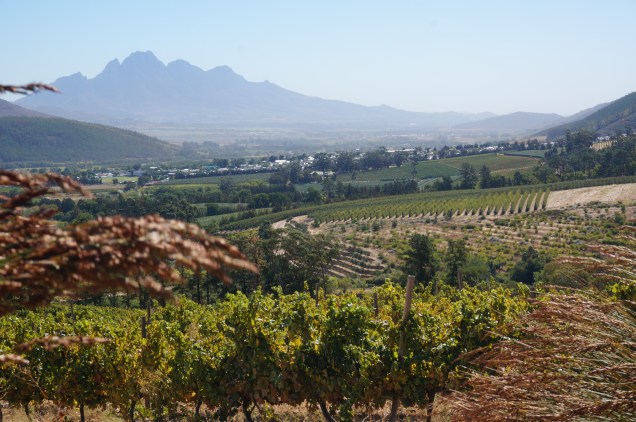
The next day I went of the wine tour.  The South Africans call wineries, ‘wine farms’.  I suppose that we have ‘wheat farms’, but it does seem a bit odd to call them ‘wine farms’.

The other people on the tour were two couples from Holland. They were very reserved to begin with.  This slowly changed as the day progressed.

In all we went to six farms.  They were all small family owned businesses.  This is good to see.  A couple had very impressive gardens and old buildings. The wines all seemed to be good to my taste and are really inexpensive.

Demonstration

I spent another day in Stellenbosch.  As I walked through the university area, I came across a demonstration.  They were Black students demonstrating about fees, lack of affordable accommodation and the use of Afrikaans in the university.  This is big issue in the RSA.

Flickr Link

https://flic.kr/s/aHskwgQ7J1

Link to the BBC on the Demonstrations

http://www.bbc.co.uk/news/business-35883919