Some Comments and Reflections on Balmain

I have lived the past 6 months on and off in Balmain.  This is far longer than my long suffering host had expected.

I have put in job applications and I am waiting for responses. In the meantime I  will be riding to Canberra and beyond.  If I can’t secure a job within a reasonable time, Plan B is a career change.  More about that later.

For those that don’t know, Balmain is a suburb in the inner west of Sydney. It is situated on the harbour with all points less than 10 klms from the Sydney CBD. My first encounter with the suburb was in 1988 when I started working for Caltex Oil  as an Auditor. Caltex owned and operated a lubricant blending plant on Ballast Point. The plant was built in 1930 and produced all of the Caltex lubricants and provided bunkering services to the Sydney Ferry fleet and other shipping, including overseas liners in the harbour.

The Caltex plant was just one of many industrial operations in Balmain. Others included the Colgate Soap Factory and the White Bay Power Works.  The suburb was industrial and the residents  primarily working class.  The majority of the houses were small timber or brick workman’s cottages.  Most the population worked in the local factories or on the wharfs.  There were many pubs.  Most of these were ‘blood houses’.  This referred to the many fights related to excess consumption of beer between the time the workers finished work, and six o’clock, when the pubs closed. This was known as the ‘six o’clock swill’.  The suburb was known to breed tough characters.  One former resident, Neville Wran a long Labor Party Premier, famously said: “Balmain boys don’t cry”.

By the mid 1980’s Balmain, had started to become gentrified, with professionals moving in the take advantage of the proximity to the city and the improving transport links, including the building of the ANZAC Bridge. This gentrification included the tarting up of the pubs.  One of the first to receive this treatment was the Dry Dock Hotel, which was not far from the Caltex site. Others to be gentrified were The London and the Royal Oak.

My first visit to the Caltex plant was huge shock.  It was like walking into an industrial museum. It appeared that very little had changed since it was built back in the 1930’s. The feedstocks for the lubricates were held tanks on the highest point of the site. The various stages of the production process were performed at levels down slope, essentially a cliff, to the water’s edge. The blending, was done in huge copper tanks. The bottling was done on amazingly basic equipment, with a lot of manual input. Most the accounting and monitoring of the process was done on manual records, with only the final product being recorded on the Caltex mainframe computer system.

One seemingly bizarre aspect of the process was that the Chief Chemist, held the recipes for the lubricants on a very cheap Commodore 64 computer that he had to buy himself. Seeing the place in operation was surreal.  This particularly the case when you looked at the marketing of the ‘hi tech’ lubricants, including the advertisements and sponsoring of the car races such as the Bathurst 1000. by the mid 1980’s, most of the staff were over 50 years old and had expected to have retired or been made redundant for many years.

A task I had to perform as an Auditor was to dip the storage tanks as part of a surprise stock-take. I performed one of these stock-takes after having lunch at the Dry Dock Hotel. It was one for the first pubs to serve Redback beer, the latest trendy boutique wheat beer. I chatted to the Storeman doing the tank dip about the lunch and the pub. I made the comment that the pub was pretty good. The response was: “The pubs are being ‘f**ked’. You can’t by a beer without some silly bugger putting a lemon in it”.

It transpired that the reason Caltex didn’t invest in the equipment in the plant was that they wanted to have the site rezoned as residential. The plan was to either sell it, or re-develop it in a joint venture. They did this with a site in Hong Kong (another story). They also transported the feedstock by truck through the Balmain streets, rather than by barge. This was designed to upset the locals and get them to support the rezoning.

The site was eventually sold the Walker Corporation, a property developer. This was contentious to say the least. If you are interested, do an internet search. In the end the NSW Government acquired the site for public land. It was decided to develop a public park on the site. The development was managed by, what was to become, the Sydney Harbour Foreshore Authority (SHFA).

I worked for the SHFA from 2003 to 2005. I had some minor involvement in the contracts for the development of the Ballast Point Park. Late in 2005, I was asked if I would attend a lunch for an ex-Caltex employee that had been employed by SHFA after the government had acquired the site. I was told that he had been employed because of his knowledge of the site and it was necessary to continue the bunkering service for a period after the acquisition of the site. He managed these services. The lunch was to celebrate his retirement from SHFA.

The lunch was held at the Royal Oak pub. I walked in the pub and has introduced to the Chief Chemist. His comment was “I feel I have seen a ghost”. It was a great lunch, lots of reminisces about the history of the Caltex plant. We both drank Redback Wheat Beer with a lemon in it.

The Ballast Point Park was completed in July 2009. It is great example of well designed public space. The architects have cleverly retained some of the relics of the old Caltex plant including the frames of the storage tanks. It highlights what a great loss the use of the site for private residential buildings would have caused. Now everyone, rather than a privileged few, can enjoy the site with its views of the harbour and the city.

It has been great to live in Balmain for the past months. The place simply gets better and better. More comments on the place to follow.
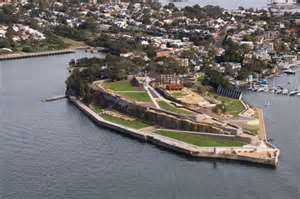
Great view of the Ballat Point Park
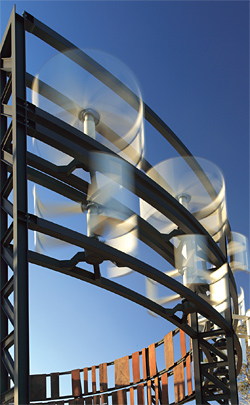
Ballast Point Park.  Clever use of the relics of the Caltex Plant
Ballast Point Park. Clever use of the relics of the Caltex Plant
Site of a great lunch.

Starting to Blog

I have decided to start a blog. 

The last year has been a bit dramatic: issues at work, an ongoing property settlement, 3 months travelling in England and Europe, being made redundant and being of no fixed abode.

It looks as though I may not be able to work for sometime and will be on my bike a lot.  

I have decided to start a blog to record my movements and thoughts along the way.  I have been reading books written by fellow touring cyclists.  The authors are professional travel writers and I do not expect to achieve their standards, however at least I will have a record of what I have done and seen. Some readers may find it interesting.

East Berlin 1984

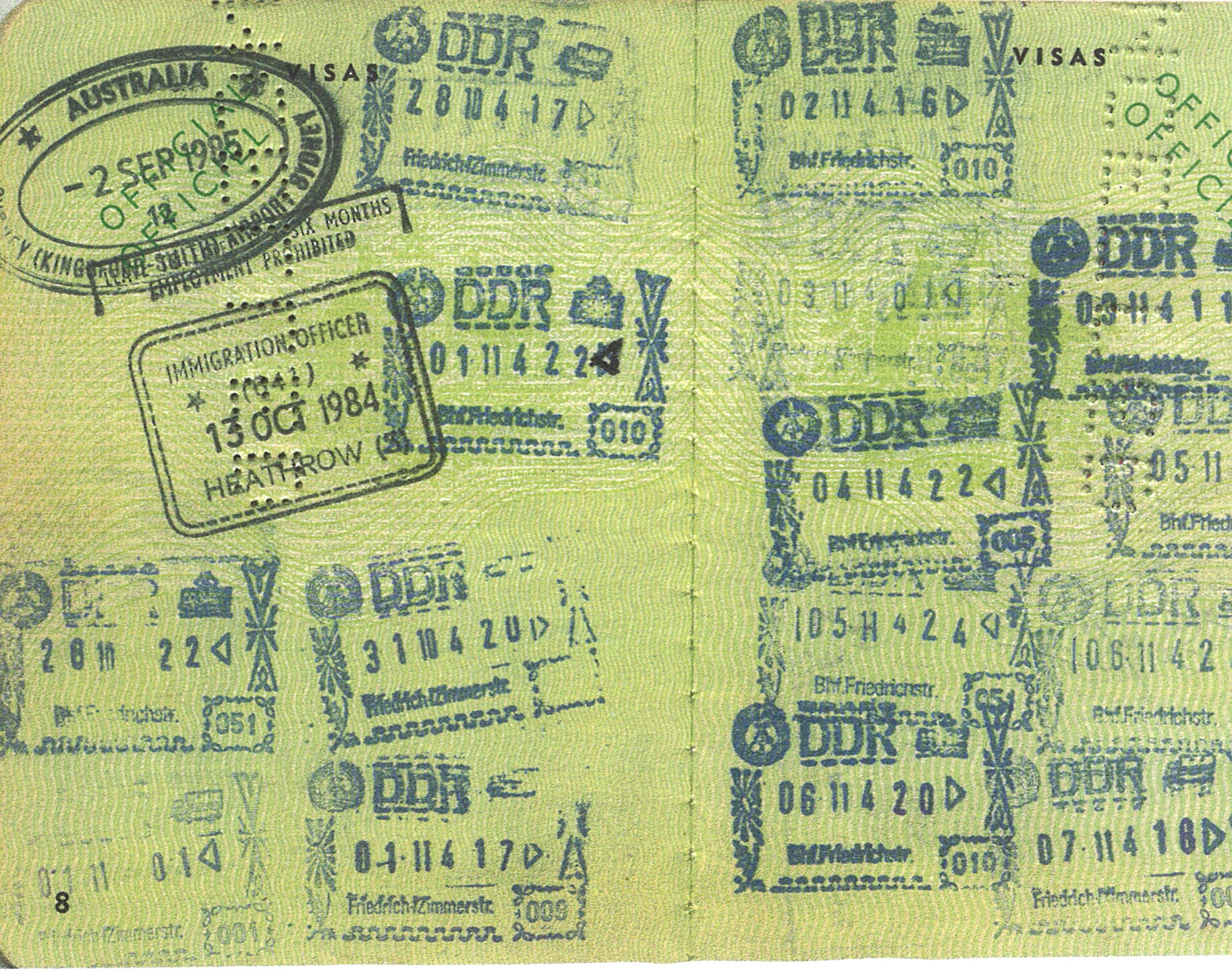
20161213_162255_31497765821_o31576089276_b22cc9ae20_o

I left Moscow on Saturday the 27th of October 1984.

In the morning, the Attaché and a driver came to the hotel to take us to the airport for our flight to East Berlin.

On the way, we came across a body of the road and group of blokes trying to pick it up.  They were all obviously very drunk.

Getting through immigration was a circus.  The Official took my passport and simply stared at me.  He then stared at the passport and at me again.  He repeated this ‘over and over’ for at least half an hour.

Once through immigration we boarded our East German Airlines Ilyushin jet heading to East Berlin.

Flight from Moscow Interflug

I recall the flight was ‘different’.  The plane climbed very steeply and was very noisy. The flight attendants were very large women.  One of them walked long the aisle with a very large jug of very hot tea. The passengers held out their  cups.  The attendant filled the cups as the passengers held them. It was amazing the no one was burnt.

Schönefeld Airport

We landed at Schönefeld Airport and were met by the First Secretary from the Australian Embassy. Again there were issues at the immigration check point. We had switched our passports from the Diplomatic Passports, we had used to enter the USSR, to Official Passports. This really confused the East German Immigration Officials.

Interhotel

We were booked in the Metropol Hotel located on Friedrichstraße.   The land behind the hotel was cleared – ‘no man’s’ land and beyond that was the Berlin Wall that divided East and West Berlin.

The Metropol was an   Interhotel’.  The Wikipedia entry is interesting.

“The Interhotel hotels were under the control of the East German state security service, the Stasi, under the Tourist Department. The Stasi tried to monitor the activities of international tourists, by sending prostitutes to audio- and video-controlled hotel rooms”.

First Crossing from East to West Berlin

On Sunday we crossed the border into West Berlin at Friedrichstraße railway station.

Security was very high.  Our passports were closely scrutinised.  The officials were confused by the fact we appeared to have arrived at  Schönefeld Airport, but hadn’t come from anywhere.  Finally they let us through.

The next step was really interesting.  Despite being located in East Berlin,  Friedrichstraße    station was on two intersecting rail lines that passed through West Berlin. The station served as a transfer point for these lines, and trains stopped there.

The other stations on these lines were in East Berlin.  These stations were sealed-off ‘ghost stations’ (Geisterbahnhof). The  trains passed through these stations under guard without stopping. As the train passed through the stations, you could see the East German guards with their  metal helmets and sub machine guns.

Once through these stations the train was in West Berlin and the stations were, of course, open.

We had arranged to meet the Consul  from the Australian Consulate in West Berlin. He was waiting at the first station on the West Berlin side.  The Consul took us on quick tour of West Berlin finishing with a lunch.

In the afternoon my colleague I and took a walk through the main shopping precinct.  I was really getting sick of John by this stage of the trip and was glad when said  he said he want to return to the hotel.

I continued on walking around the  city and found the Europa Center.  It is large shopping and entertainment centre  that was designed to showcase the best of the ‘West’ in this divided city.

Good Looking Women in the Bar

When I got back to the Metropol Hotel, I found John in the bar.  There were 10 to 12, extremely attractive women in the bar and only a couple of other people – two pommie blokes who told us they were in East Berlin on business.  The scene was consistent with the description in the Wikipedia entry.

Starting Work at the Embassy

Next day we started work at the Embassy.  The experience was somewhat surreal. The Embassy was to closed and had already been downsized.  There were only three Australian based staff – the First Secretary, an Attaché and a Communications Operator (to handle the cables).  The only locally engaged staff member apart from an East German driver was a Swedish woman who was married to a Swedish Diplomat.

The First Secretary was a ‘character’.  He had only been at the post for three months, but had managed to spend almost all of this annual ‘representation allowance’ on “parties most often attended by the ‘Friendlies’ (i.e. staff from the USA, UK and Canadian) and other Embassies”.

I was to come across this bloke on later trips with DFA and playing cricket in the ‘Bangkok Sixes’ in 1987.  I will posted about that sometime.

Room Full of Bank Notes

The East German government (DDR) fixed the country’s currency,  the ‘Ostmark’,  at one to one with the West German ‘Deutsche Mark’.  This was similar to the Russian Rouble being set at one to one with the USA Dollar.

Both the Rouble and the  Ostmark were ‘soft currencies’ and could not be traded or exchanged on the open market.  They were, however,  traded on the ‘black market’.  The black market rates revealed the real value of the currencies. In the case of the Ostmark v the Deutsche Mark’ the black market rate was more like 40 to one.

The GDR forced the western embassies to convert a certain amount of hard currencies (Deutsche Marks, USDs, GBPs and AUDs etc.) into Ostmarks each month and to pay all their expenses (local salaries, utilities etc.) in hard currencies.

The embassies, including the  Australian Embassy did however, receive income in the form of visa fees and the disposal of unneeded equipment etc., in Ostmarks.  The problem was that there was virtually nothing the embassies could buy with this money, apart from some foodstuffs.

The result was that the Australian Embassy accumulated a huge amount of Ostmarks in cash that it could not spend.

There was a room in the Embassy that was almost full of paper Ostmarks of various denominations.  They were stacked from the floor to the ceiling.  The notes were rotting and really stank.

It you applied the official exchange rate, these notes were nominally worth thousands of Deutsche Marks and AUDs.  In reality, they were worth nothing.  They couldn’t even be sold on the black market as that would have been illegal.

 Back into the West

We ate dinner in the hotel on Monday night.  The food was very ordinary.

On Tuesday I decided that I wasn’t going eat in the hotel again and told John that I was going to eat in the West.  Part of the reason for doing that was that I knew that he would be stay in the East and would not be venturing out of the hotel.

I crossed that border at Friedrichstraße station and headed to the Kurfürstendamm, the main shopping and entertainment street in the West.

I found a good restaurant and ate well.

I took the train back to , Friedrichstraße    station and crossed back into East Berlin.  I now had three DDR stamps in my passport.

Dinners with A Based Staff

Later in the week we had dinners at the staff from the Embassy in their apartments.  I can recall, as we were driven to and from the apartments, how dark the streets were in East compared to the West.  There were hardly any cars and no people walking.

Back in the West

On Friday night, I headed back into the West and the Kurfürstendamm district.  After eating. I went to an Irish Pub.  The place was really jumping.

I started chatting to a group of people who speaking English.  One of them turned out to be a Swedish girl who worked as a nanny for a Swedish diplomatic family living in East Berlin.  She of course knew the Swedish woman who was working as a locally engaged staff person at the Australian Embassy.

When it was time to head back into the East, the Swedish girl said that she was taking taxis to ‘Checkpoint Charlie’ and where her “family would be here to meet her”.  She asked if I wanted to share the taxis. I did.

The crossing at Checkpoint Charlie was interesting in that it was ‘open’ as opposed to the crossing at the railway station.

The “family” turned out to be the father. He offered me a lift to the  Metropol.

Quick Trip to Hamburg

Next morning John and I crossed back into West Berlin and caught the train to Hamburg.  It was interesting travelling on the train, as it crossed form West Berlin into the part of East Germany west of the city and then into West Germany.  There was a lot of carry on with East German border guards.

We stayed overnight in Hamburg, returning to East Berlin on Sunday afternoon.

Meals in the West

On Monday and Tuesday I cross over to the West to eat.  I had decided to cross back into the East via Checkpoint Charlie. This involved taking a taxis to the Border, passing through the Checkpoint and walking back the hotel along Friedrichstraße which ran parallel to ‘The Wall’.

As I walked along the street,  a Trabant car followed about three metres behand me.  When I stopped, it stopped.  When I started walking again, it started up again.

It was surreal.  It is almost certain that the two blokes in the car were from the Stasi.

Date with Swedish Girl

I had arranged to have dinner with the Swedish Girl that I had met in the West the previous Friday.

We had agreed to meet in the same Irish Pub in the Europa Center. Over the meal she told me her experiences living a working the East including, the constant surveillance.

One of the stories she told me was about efforts by the Swedish Embassy to find  ‘bugging’ devices in their cars.

They had concluded that was impossible to stop the bugging in the Chancellery or the residences.  Like the Australian Embassy the  bugging in the Chancellery has counteracted by the use of a ‘sound proof box’ constructed within the building.  If sensitive issues needed to be discussed, staff went into the box.

The Swedes did, however, think that they could find any ‘bugging devices in their cars.  They drove on the cars across to West and searched them thoroughly for any bugs.  They didn’t find anything.

They then orchestrated a series of events including conversations in the cars, designed to determine if the conversation were being bugged.

Whatever the East Germans did next proved that they must have be listening to conversations in the car.

The Swedes took the cars back  into the West again and searched for the bugging devices.  Again they found nothing.

No Talking

After dinner the Swedish girl and I crossed back in the East via Friedrichstraße station.  As we approached the entrance to the hotel she told me that she “wasn’t going to speak to me anymore”.  I wasn’t sure what to make of that.

As it turned out there was a lot of writing on pieces of paper and sign language.

Flight to Bonn

We finished up at the Embassy around lunch time the next day, Thursday the 9th.

Our next stop was Bonn.

The First Secretary drove us to Checkpoint Charlie.  We walked across into the West where the Australian Consul in West Berlin met us and drove us to Tempelhof Airport.

The flight was interesting in the that when the plane was flying over East German land east of Berlin, it was only allowed to fly at 10,000 feet.  When we cross into West Germany it climbed to the normal 35,000 feet.

It was evening by the time we checked into our hotel in Bonn.

Flickr Link

https://www.flickr.com/gp/twwilko_photos/SF4Yr0

About Interflug

https://en.wikipedia.org/wiki/Interflug

About Interhotel

https://en.wikipedia.org/wiki/Interhotel

Europa Center

https://en.wikipedia.org/wiki/Europa-Center

Kurfürstendamm

https://en.wikipedia.org/wiki/Kurf%C3%BCrstendamm

Checkpoint Charlie

https://en.wikipedia.org/wiki/Checkpoint_Charlie


Moscow 1984

31497770611_3fe06a8d24_o

I started working at the Australian Department of Foreign Affairs on the 20th of September 1984.

My first trip was to Moscow. My travelling colleague was a crusty old former member of the Air Force called John.

Flight to London

We left Canberra early in the morning on the 10th of October for Sydney, before flying to Singapore and onto London.

I can recall that the place was very grey and gloomy as the taxis drove us from Heathrow to the Tower Hotel which is, as the name suggests, next to the Tower of London.  The cost of the taxis was GBP 18.

The plan was to stay awake all day to avoid jet lag.

 Meeting old Friends

I had arranged to meet up with a girl I knew from Kent.  I got to know her when I was living in London in 1983.  She worked for an interesting organisation that had offices opposite Green Park.

After a quick shower, I headed to Victoria Station meet her off the train. We spent most of the day together.

In the event I met up with couple also from Kent.  I had met the bloke at the St James Tavern in 1978 when I was first living in London.  I become good friends with him and bunch of his mates.  We used to meet up at the St James Tavern most Friday nights.  It was a very popular place with Swedish au pairs.  Two of the blokes ended up marrying Swedish girls.

My mate didn’t marry a Swedish girl.  He married a Welsh girl. I was privileged to go to their wedding in 1983.

My diary note says that we had dinner in Convent Garden and the I was “knackered” when I finally got to bed.

Flight to Moscow

The next day, Sunday John and I flew to Moscow. The First Secretary and the Attaché from the Embassy met us at the airport and drove to the National Hotel which is opposite Red Square.

We ate in the hotel.  The food was excellent.

Interesting Bathroom

I got up early to have a shower before breakfast. The bathroom was a bit odd.  It opened directly on to the bedroom.  The bath/shower was in the middle of the bathroom.  Another odd thing that was that there were no curtains on the windows of the room.  It looked directly on to Tverskaya Street and the building on the other side of the street were quite close.

The really odd thing about the shower was that there was no hot water.  I had a very short and invigorating shower.

After breakfast, a locally engaged driver arrived and drove us to the Embassy.

The First Secretary asked us what we thought of the hotel.  I told him about the issue with the shower.  John had no problem with his shower.

The First Secretary also asked if I had noticed that there were no curtains on the windows.  I said I did.  He then told me that I had almost certainly been photographed by the KGB from the building across the street.

He also said that when I got back to the hotel: “if  the water is still cold, you should talk to your door knob and ask for the hot water to be turned on”.  He suggested that I call the door knob “Boris”.

The Hot Water is Delivered

Back in the hotel after work, I turned on the shower.  The water was still cold.  I left the tap running and walked to the front door.  I spoke directly at the door knob: “Boris can you please turn on the hot water”.  Almost immediately, steam started billowing from the bathroom.

Beautiful Women

For the next two nights, we ate in the restaurant in the hotel.

An unforgettable feature of the bar in the hotel were the women.  The staff in the Embassy had told us about these ‘Beriozka’ girls.  They were state sanctioned prostitutes who were allowed to ply their trade in the hotel and long as they told the police and KGB who they had been with and what had happened.

This information could be used as “black mail material”.  They were called ‘Beriozka’ girls, because Beriozkas were stores in the USSR that would only accept hard currency and could only be used by foreigners and high ranking Soviet Officials.  They sold western and luxury Soviet goods, not that there were many of those.

One of the women was particularly stunning, with long black hair, pale skin and striking blue eyes. Her body was perfectly designed.

My colleague, John was at pains to tell me that “under no circumstances was I to have any contact with any of these women’.  If it did happen, “news of that would be get back to ASIO and my security clearance would be gone and so would be my career in the Department”.

Down Under Club

Friday night was drinks night at the Embassy.  It was held in the social club called the Down Under.  All of the ‘friendlies’ – UK,USA and Canada have these clubs and took turns to be the main venue each Friday.  This was, and still is, the practice in many capital cities around the world, particularly at the so called ‘hardship’ posts where social life for diplomats can be limited.

Staff from all the ‘friendly’ Embassies were at the club.  It was a big night.

Sightseeing

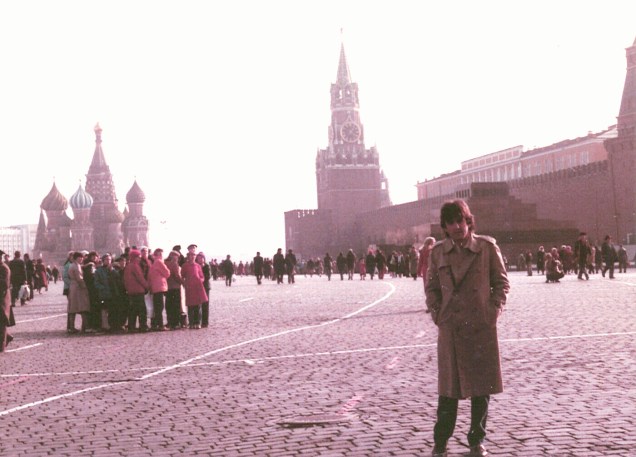
Next day we went on a tour of the Kremlin and walked around Red Square checking out the grave of the ‘Unknown Soldier’ and Lenin’s Mausoleum.  We also went into the GUM Department Store.  There wasn’t much for sale, and what there was looked like something from the 1950’s.

On Sunday we went on city tour.  This didn’t involve much except a visit to the university.

The Circus

In the evening we went to the Moscow Circus.  That was fantastic.

We got to and from there on the underground train system.  The stations are like art galleries.  Truly amazing.

Concert

After work on Monday we went to the Moscow Conservatory to see a concert. The tickets were organized by the Embassy.

We arrived late and could not take our ‘special’ seats. At the intermission, the attendants came looking for us and were very apologetic. It was our fault that we were late.

The concert was excellent and include Dvorak’s New World Symphony. My colleague didn’t like the concert at all.  I added philistine to my list of opinions on him.

Dinner being Monitored

On Wednesday night, we had dinner at the apartment of the Trade Commissioner.

All the Embassy staff, with the exception of the Ambassador, lived in the same apartment complex.  Staff from other missions, such as the Brits and the Canadians also lived in the same complex.  It was a very secure place.

We had been told about the extent of the monitoring and surveillance diplomatic staff are subjected to. We were now going to be given a demonstration.

Part way through the meal, the Trade Commissioner indicated that he wanted silence.  We all stopped talking.  He then looked to the roof and said: “I have you are having a good night Comrade.  We are having an excellent meal and very good Australian wine.  I am sure you would like it”.

The rest of the guests laughed.   He then went on to say: “Comrade, I don’t want you to get jealous.  I am going leave a bottle of wine outside the front door”.

The Trade Commissioner beckoned me to follow him to front door carrying a bottle of wine.  He opened the door and left it on the floor outside.

We then returned to the meal.

After about 10 minutes, the Trade Commissioner beckoned me back to the front door.  He opened the door.  The bottle was gone.

Last Night

Friday the 25th of October was our last night in Moscow.

The First Secretary had arranged a meal for us and Embassy staff at the ‘Berlin Restaurant’.  We needed a ‘Third Person’ diplomatic note to be granted permission.

John and I walked to the restaurant from the hotel.

The girls manning the cloakroom very remarkable attractive.

We were taken to the table where we met the First Secretary and other staff from the Embassy.

Part way through the meal a band started playing and people started dancing.  One of the cloakroom girls came over to the table asked me to dance.  I looked across at the First Secretary and struggled as if to say “what do I do?”.  I declined the offer.  After she left, I told the others who didn’t hear the request, what had happened.  I asked if would have been ok to dance with her.  They said that it would have been ok. My colleague, John frowned with disapproval.

No long later, a second girl came over to the table and asked me to dance.

This time I accepted.

As we were dancing, she asked me where I came from.  I told her that “I was an Accountant working in London for an oil company”. She gave me a very confused look and walked off.

Back at the table the staff from the Embassy agreed that “the girls must have been trainees”.

Speaking to Bar Girls

After the meal, John I walked back  to the hotel and agreed that we would have one beer in the bar to celebrate leaving Moscow.

The very striking ‘Beriozka’ girl, that I mentioned above, was there.  We both looked at her and she smiled. It was obvious that she was coming over to speak to us.  I said to John, “what are you going to do now?” He said “I suppose a chat on the last night is Ok”.

The girl said “you two are here every night but don’t talk to the girls?”.  John looked flustered. I said “we can’t afford to buy you drinks”. She laughed. We then had a bit of chat about what we had seen in Moscow.  She told us that she “worked as a secretary”.  At one point she asked us “how are the repairs at the Embassy going after the fire”.

We left the bar.

Leaving Moscow

In the morning the Attaché and a driver came to the hotel to take us to the airport for our flight to East Berlin.

On the way, we came across a body of the road and group of blokes trying to pick it up.  They were all obviously very drunk.

Getting through immigration was a circus.  The Official took my passport and simply stared at me then it.  He repeated this over and over for at least half an hour.

Once through immigration we boarded our East German Airlines Ilyushin jet heading to East Berlin.


Flickr Link

https://www.flickr.com/gp/twwilko_photos/3Hg799

Links to National Hotel

http://www.national.ru/

https://en.wikipedia.org/wiki/Hotel_National,_Moscow

Hard Currency Stores

https://en.wikipedia.org/wiki/Beryozka

Moscow Conservatory

https://en.wikipedia.org/wiki/Moscow_Conservatory