One of the reasons that I made this trip to Japan was to visit the cities that were bombed with nuclear weapons in 1945.
Dad’s WWII Experiences
As many readers know, my father was a prisoner of war (POW) in WWII. He was captured in Singapore in February 1942. He was taken to the Burma-Thai (Death Railway) and finally transported to Japan. He was held in POW Camp 17 Fukuoka which was in Omuta, about 40 miles east of Nagasaki.
I have posted my father’s WWII story on this blog.
I slowly became aware of my father’s wartime experiences as I was growing up. As with many that have had such experiences, he did not speak about them much. When he did, what was said was sanitized.
One of my first recollections about becoming aware of his experiences was being taken to Changi Army Base in Singapore in 1967. At that time, the Serierang Barracks still existed. This is where that allied soldiers were held by the Japanese to force an unconditional surrender.
As I got older, I recall him mentioning his WWII experiences more frequently. Naturally his friends and our relatively mentioned it. Also, he suffered a number of medical issues as a result of his wartime suffering. This was explained to me as I got older.
The other issue of course, was my mother’s WWI experiences. Her first husband was a fighter pilot in the RAAF. He was shot down and killed by the Japanese in the air raid on Darwin on 19 February 1942. She also was in the RAAF, working as a Cypher Clerk.
After the war my mother trained a nurse. At one time she was a Theatre Nurse for Edward (Weary) Dunlop. He is famous for being on the Thai Burma Railway.
As far as I recall, my father had no desire to revisit Japan.
Hiroshima Bomb
I took the Shinkansen from Tokyo to Hiroshima, arriving late in the afternoon.
The next day I bought a ‘hop on hop off’ city tour ticket. It took me to the Genbaku Dome. This building was the Industrial Promotion Hall until the bomb exploded above it on the 6th of August 1945. It was one of the few buildings left standing near the hypocentre.
Across the river from the dome, is the Peace Memorial Park. This contains a number of memorials related to the bomb, including one that lists all the names of those killed. There is also the Flame of Peace. The flame will only be extinguished once the last nuclear weapon has been destroyed.
The Peace Memorial Museum is located at the end of the park. The museum is devoted to the history of the bomb (from the Japanese perspective) and its impact. It contains exhibits of the physical impact of the explosion on building materials and peoples’ clothing. It also shows in graphic detail the injuries inflected on the victims and survivors.
Art Gallery
On a lighter note, I also visited the Hiroshima Museum of Contemporary Art. It had a special exhibition including works by Andy Warhol and Francis Bacon. No photography was allowed. This rule was being enforce by a large number of very stern faced attendants.
Next to the Art Museum is a Munga Library. Munga are Japanese comics. Their apparent obsession with this form of communication is interesting.
Nagasaki
Next stop was Nagasaki, which is on the island of Kyushu.
I found it to be a surprisingly compact city of around 440,000. It is surrounded by quite high mountains and has a large deep harbour.
After his liberation, my father was brought to Nagasaki harbour to be placed on a USA Navy ship heading to San Francisco.
He wrote a letter from the ship to his friends, Les and Olga Sinclair. In that letter he says that the last 18 months (i.e. the period in Japan) have been really awful. Considering that the previous 18 months had been on the Death Railway and in Changi, that bears some thinking about.
In the morning I was joined by my Balmain host, with whom I had been skiing in Hokkaido. He joined me on the tour of Nagasaki Bomb related sights. He had read my Dad’ story and had a comment to make: “I thought my first three years in the Australian National Audit Office were tough”. A classic Balmain Host comment. My father would have laughed at that one.
The Bomb Sites
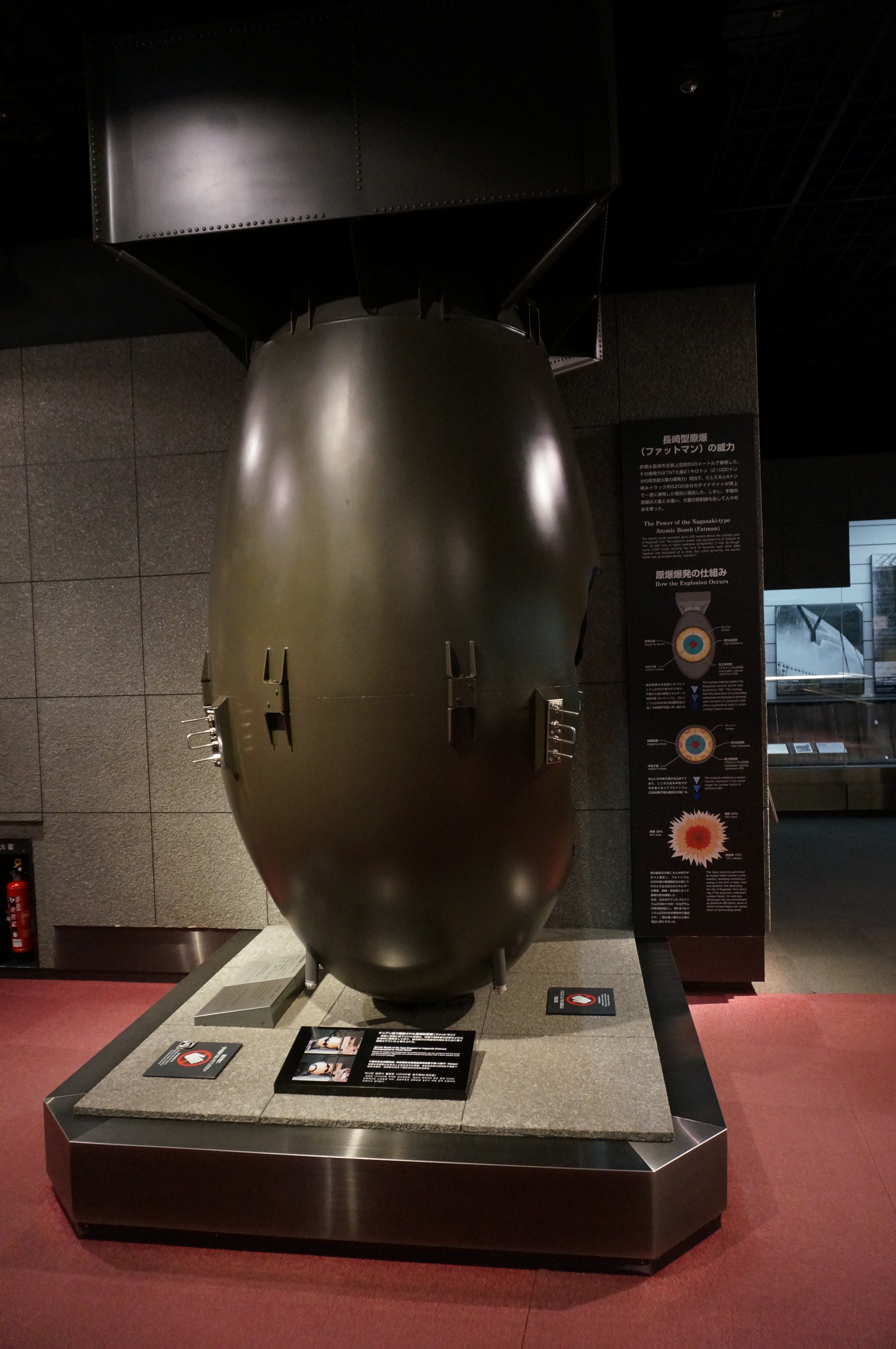
Nagasaki was bombed on the 9th of August 1945, three days after the bomb fell on Hiroshima. The Hiroshima bomb was a uranium bomb, and the Nagasaki bomb was a much more powerful, plutonium bomb.
The area of damage caused by the Nagasaki bomb was limited as a result of the high hills surrounding the city.
The hyocentre of the explosion marked by a black stone column within the Peace Park. Nearby are bomb blast relics including a section of the Urakami Cathedral which was flattened in the blast.
The Museum is nearby and is similar to the one in Hiroshima. It includes a replica of the bomb and a timeline of the events (from a Japanese perspective) leading to the bomb being dropped.
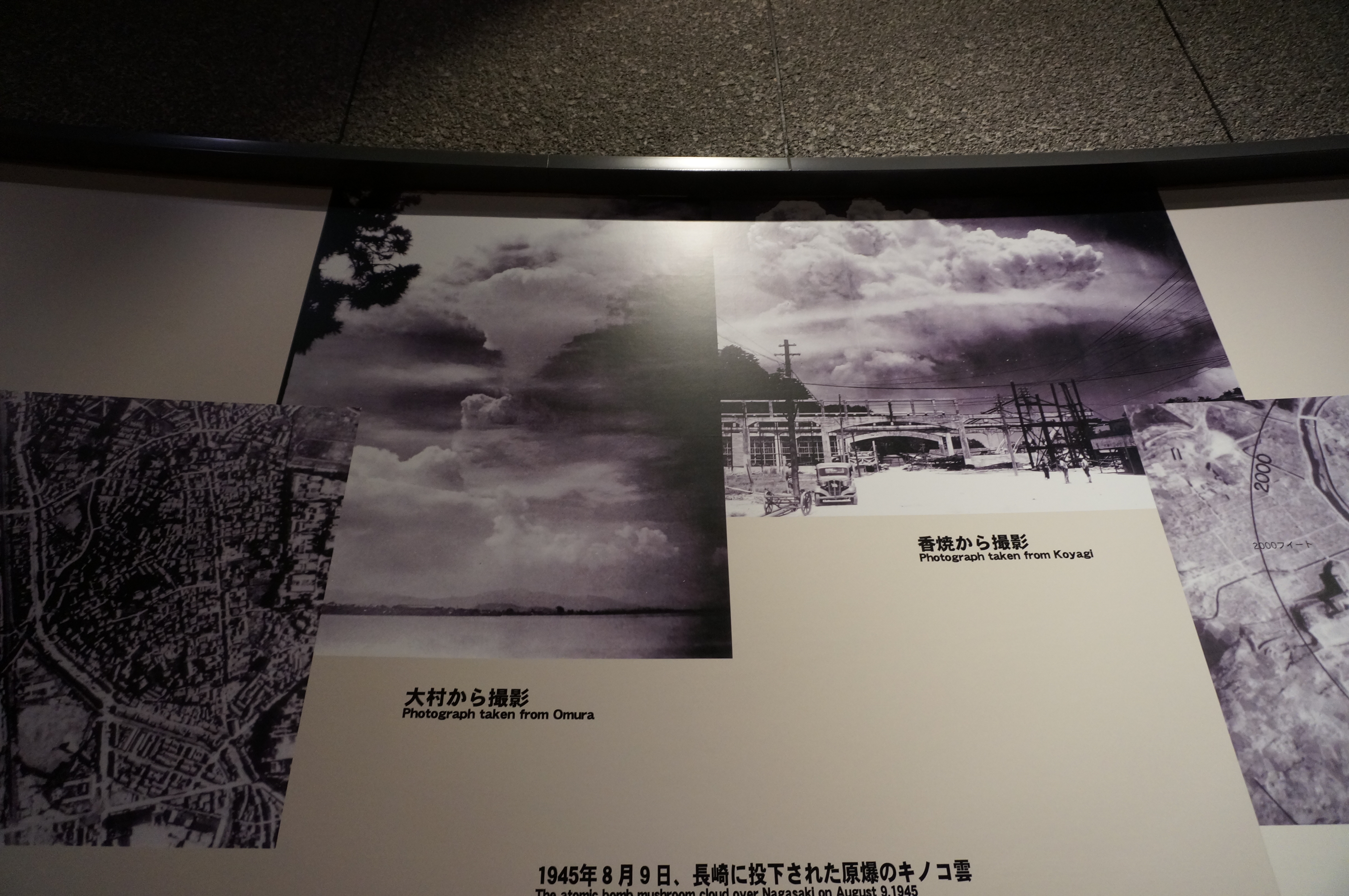
I found one photograph particular interesting. It shows a view of the bomb from Omuta where my father was being held.
Link to Camp Roster
http://www.mansell.com/pow_resources/camplists/fukuoka/Fuku_17/fuku_17_brit_roster.html
View from Omuta
Brief Comment
I am the child of someone who was impacted by the dropping of the bombs and saw the devastation of the Nagasaki Bomb. There are, of course others. We are all in a unique position.
I believe that my father would not have survived the war if it was not for the bombs. He was in a very weak state in the prison camp under applauding conditions. The Japanese were ferociously defending their southern islands against the advancing USA forces.
It is also on record that an instruction had been issued under the hand of the Emperor that, if an area become a battle ground, all Allied POWs in that area were to be killed.
President Truman Links
Press Release on the Dropping of the Hiroshima Bomb
Leaflet Dropped on Japan before the Bombing
Kill All Prisoners Order
http://en.wikisource.org/wiki/Kill_All_Prisoners_Order
Flickr Links
Hiroshima
Nagasaki Bomb
Nagasaki Other
 billrider2013